
Comparing Solar Quotes: Why a Lower Upfront Cost Doesn’t Always Mean Lower Overall Cost
When comparing solar panel and battery storage quotes, whether for a home, business, school, college or other organisation, the first thing most people look at is price.
That’s completely understandable.
But with solar and battery storage systems, the cheapest quote is not always the best value and, in some cases, it can become the more expensive decision over time.
At first glance, several systems can appear very similar on paper. Different installers may propose comparable system sizes, savings and payback periods. However, what sits behind those figures can vary enormously.
The quality of the components, standard of installation, accuracy of the system design and level of aftercare all play an important role in how well a solar installation performs over the next 10–20 years.
Why Are Solar Quotes So Different?
One of the most common questions homeowners ask is:
“Why are solar quotes so different for what looks like the same thing?”
The answer is simple: not all solar installations are created equal.
Solar pricing can vary significantly depending on:
Solar panel quality
Inverter quality
Battery technology
Installation standards
System design
Monitoring capabilities
Warranty coverage
Aftercare and support
Installer experience
Some companies focus heavily on winning work by offering the lowest possible upfront price. Others focus on long-term reliability, quality workmanship and system performance.
That difference matters far more than many people realise.
What To Watch Out For When Comparing Solar Quotes
If you are currently comparing solar or battery storage quotes, there are several things worth paying close attention to.
Unusually Cheap Pricing
If one quote is dramatically cheaper than the others, it’s important to understand why.
A lower price can sometimes indicate:
Lower quality components
Reduced installation time
Less experienced installers
Limited aftercare support
Shorter warranties
Poorer system optimisation

Solar is a long-term investment. Choosing purely on price can lead to costly problems later.
Unknown or Unproven Brands
Many customers understandably focus on panel wattage or battery size, but brand quality matters too.
Established manufacturers generally offer:
Better long-term reliability
Stronger warranties
Better technical support
More accurate performance claims
Cheaper systems may use products with limited track records or weaker support networks.
Unrealistic Savings Claims
Be cautious of quotes promising extremely fast payback periods or unusually high savings figures.
A good installer should provide realistic performance estimates based on:
Your roof orientation
Shading
Usage habits
Export tariffs
Seasonal generation patterns
Overpromising savings is unfortunately common in the industry.
Limited Aftercare & Support
One of the biggest concerns after installation is what happens if something goes wrong later.
Before choosing an installer, ask:
Who handles warranty claims?
Is technical support available?
Will someone assist if the system develops a fault?
How quickly are issues resolved?
Good aftercare has real value.
Cheap Solar Panels Can Cost More Long-Term
A cheaper upfront system may save money initially, but the long-term costs can be significantly higher.
Lower Efficiency Over Time
Lower quality panels and components can degrade faster, reducing energy generation year after year.
Even small efficiency losses can add up substantially over the lifetime of the system.
Increased Risk of Failures
Cheaper inverters and batteries are often more prone to:
Faults
Performance drops
Communication failures
Early replacement
Inverter replacement alone can become a major unexpected cost.
Poor Installation Standards
Even high-quality products can underperform if they are poorly installed.
Common issues caused by rushed or substandard installation include:
Roof leaks
Poor cable management
Incorrect system configuration
Reduced efficiency
Safety concerns
Workmanship matters just as much as equipment quality.
Why Workmanship Matters in Solar & Battery Storage
Solar is not simply a product purchase it is a technical installation that needs to perform safely and reliably for decades.
A well-designed system should be tailored specifically to:
Your property or premises
Your energy consumption
Your future plans
Your available roof space and layout
Your operational requirements
Your budget
Good installation practices affect:
System performance
Longevity
Safety
Maintenance requirements
Future upgrade potential
This is why experienced installers rarely compete solely on being the cheapest.
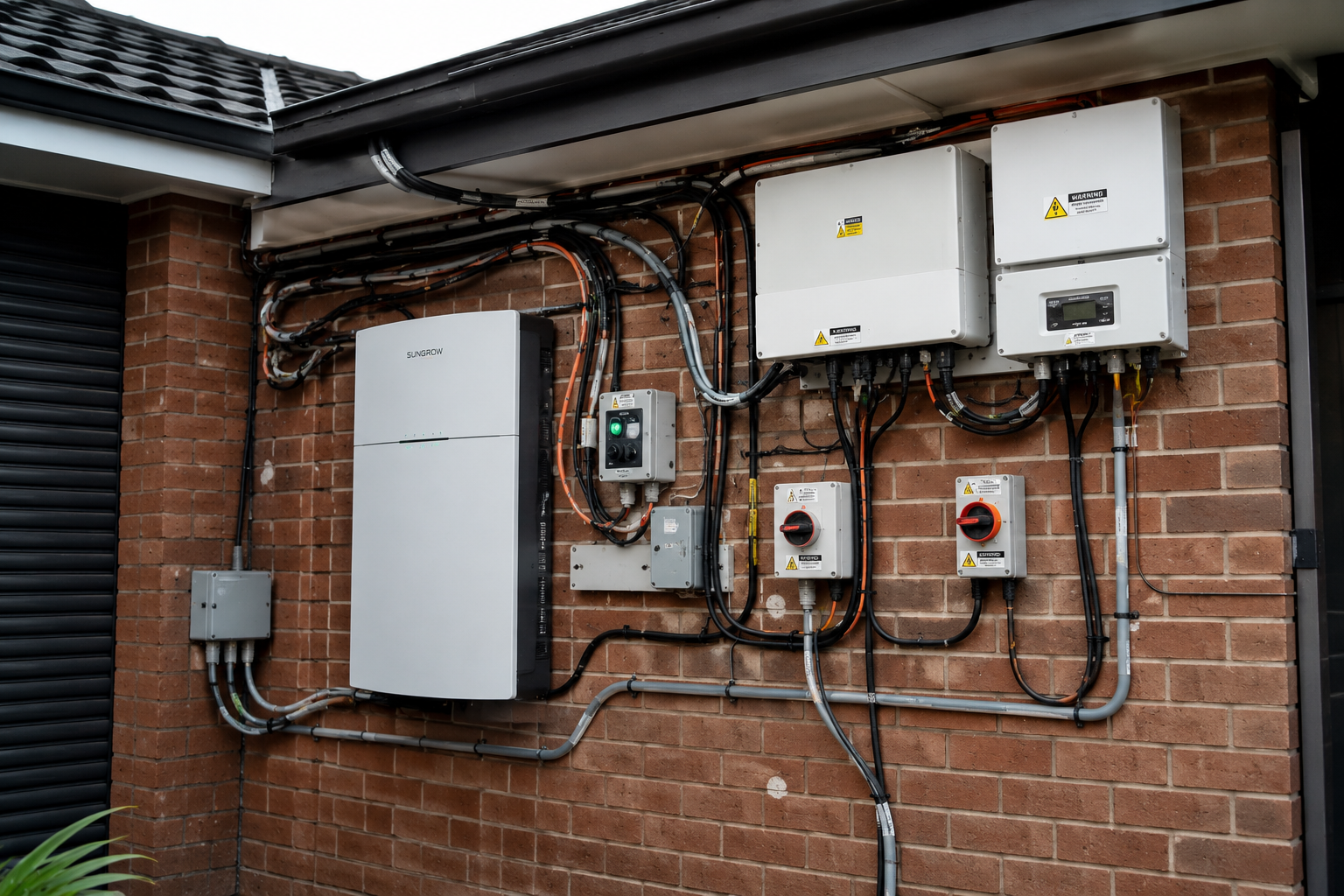
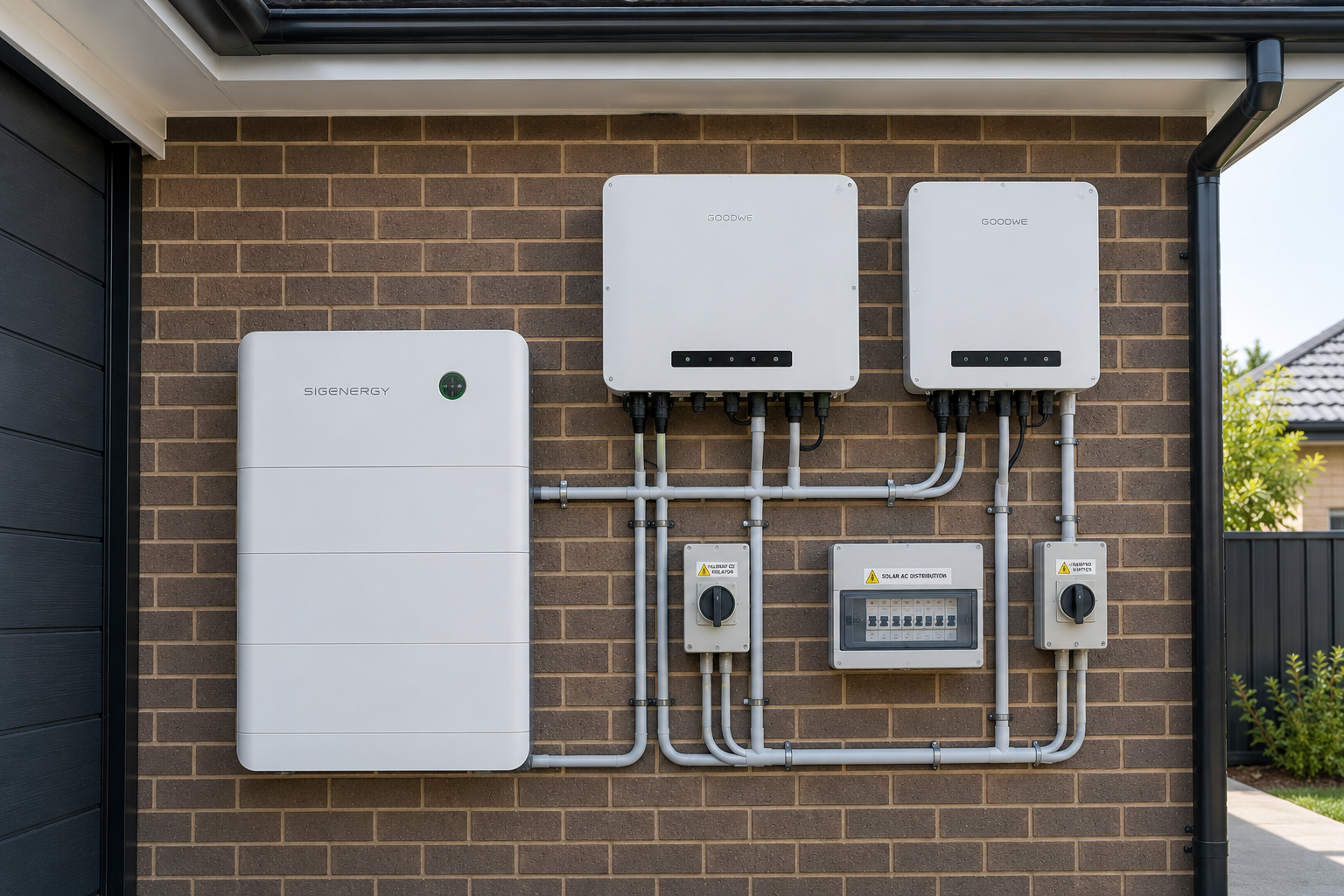
At first glance, both installations may appear to “do the same job” but the quality of workmanship behind a solar and battery installation can make a significant difference over time.
Clean cable routing, consistent conduit runs, properly spaced components and attention to detail are not just about appearance.
They can also affect long-term reliability, ease of maintenance, safety and overall system durability.
Poorly planned or rushed installations may still function initially, but untidy cable management, inconsistent routing and cramped components can make future servicing more difficult and may increase wear over time.
A professionally installed system should look organised, carefully planned and built to last not simply installed as quickly as possible.
| Question to Ask | Why It Matters |
|---|---|
| What brands do you use and why? | A reputable installer should be able to explain why they recommend specific panels, inverters or battery systems, rather than simply offering the cheapest available option. |
| What warranties are included? | Make sure you understand both manufacturer warranties and installation or workmanship guarantees, as these protect different parts of your solar and battery storage system. |
| Who handles support after installation? | Ongoing support is extremely important for long-term peace of mind. If something goes wrong later, you need to know who is responsible and how quickly support is available. |
| Is the system properly designed for my property or premises? | Every site is different. A good installer should explain how your roof layout, available space, energy usage, shading, battery requirements, operational requirements and future needs have influenced the system design. |
| Are the savings estimates realistic? | Honest projections are more valuable than inflated promises. Savings should be based on your actual energy consumption, usage profile, tariff details and realistic generation expectations. |
Solar & Battery Storage Should Be Measured Over 10–20 Years
The real value of a solar system is not measured by the installation price alone.
It should be measured by:
Lifetime energy savings
Reliability
Performance consistency
Maintenance costs
Warranty support
Overall return on investment
A well-installed, high-quality system can continue delivering strong performance and savings for decades.
A cheaper system that requires repairs, underperforms or fails early can quickly erase any initial saving.
The Difference Between “Cheap” and “Value”
There is a big difference between:
the cheapest quote
andthe best long-term value
The right solar system should provide:
Reliable performance
Long-term savings
High-quality installation
Strong warranties
Dependable support
That’s why homeowners and organisations alike should consider quality, experience, system design and long-term support alongside the headline price.
Final Thoughts
Solar and battery storage can be an excellent long-term investment when designed and installed properly.
However, focusing purely on the lowest upfront cost can sometimes lead to disappointing results, higher maintenance costs and reduced savings over time.
A lower upfront cost does not always mean lower overall cost.
Choosing a system based on quality, reliability and long-term value can help ensure your investment performs the way it should for many years to come.
Frequently asked questions on solar install quality
Why are some solar quotes much cheaper than others?
There are several reasons why one solar quote may be significantly cheaper than another.
In some cases, lower pricing can come from using lower-cost panels, inverters or battery systems. In others, savings may come from reducing installation time, using smaller installation teams or limiting the amount of time spent on system design, testing and commissioning.
Areas homeowners do not always see immediately such as roof fixings, cable routing, electrical connections, weather sealing and overall installation finish can all affect the long-term reliability and performance of the system.
Aftercare and support also vary between installers. Some lower-cost quotes may include less ongoing support or shorter workmanship guarantees.
This is why it is important to compare not just the upfront price, but the overall quality, reliability and long-term value of the installation.
Can poor installation affect solar panel performance?
Yes. Even high-quality solar equipment can underperform if it is not installed correctly.
Incorrect system configuration, poor cable management, inadequate roof sealing or rushed commissioning can lead to:
reduced energy generation
inverter or battery faults
water ingress issues
communication problems
reduced system lifespan
A solar and battery storage system is designed to operate for decades, so installation quality plays a major role in both performance and long-term reliability.
What should a business, school or organisation compare when getting commercial solar quotes?
Commercial solar quotes should be compared on more than the total installation price. Consider the proposed system size, expected generation, predicted self-consumption, equipment specification, warranties, installation standards, monitoring, aftercare and the assumptions used to calculate potential savings.
For schools, colleges and businesses in particular, the proposed system should reflect the site's actual electricity consumption and when that electricity is being used.
Are all solar panels the same?
No. Solar panels can vary significantly in efficiency, degradation rates, durability, warranty coverage and long-term performance. Two systems with the same panel count may produce very different results over time depending on the quality of the products used.
Why do some solar systems cost more than others?
The cost of a solar installation can be affected by panel quality, inverter technology, battery performance, installation standards, system complexity, warranty coverage and aftercare support. Higher-quality systems are typically designed for better long-term reliability and performance.
Does installation quality really matter with solar panels?
Yes. Even high-quality equipment can underperform if it is poorly installed. Cable routing, roof mounting, electrical connections, system configuration and commissioning all play an important role in system reliability, safety and performance.
How long should a solar and battery storage system last?
A professionally installed solar system can often perform effectively for 25 years or more. Battery lifespan depends on the technology and usage patterns, but high-quality systems are typically designed for long-term daily use with manufacturer-backed warranties.
What should I compare when looking at solar quotes?
It’s important to compare more than just the upfront price. Customers should also consider:
panel and inverter brands
battery specifications
warranty coverage
estimated generation
installation standards
aftercare support
installer reputation and experience
Is the cheapest solar quote always the best value?
Not necessarily. Lower-cost systems can sometimes involve compromises in component quality, installation time or aftercare provision. The best value often comes from a system that combines quality products, professional installation and reliable long-term support.
What happens if a solar inverter or battery fails?
A reputable installer should provide ongoing support and help manage manufacturer warranty claims if equipment develops a fault. This is why aftercare and support are important considerations when choosing an installer.
How important are warranties with solar panels and batteries?
Warranties are extremely important because solar and battery systems are long-term investments. Homeowners should understand both manufacturer warranties and workmanship guarantees, as they cover different aspects of the installation.
Can poorly installed solar panels cause problems later?
Poor installation can potentially lead to issues such as reduced system performance, water ingress, loose cabling, communication faults, maintenance difficulties and reduced equipment lifespan. Choosing an experienced installer helps reduce these risks.
How can I tell if a solar installation has been done professionally?
A professionally installed system will usually show attention to detail through:
neat cable routing
consistent conduit runs
securely mounted equipment
tidy finishing
clear labelling
organised layout
well-planned component positioning
Good workmanship is often visible in the overall finish of the installation.