
Home Battery Backup & Energy Independence
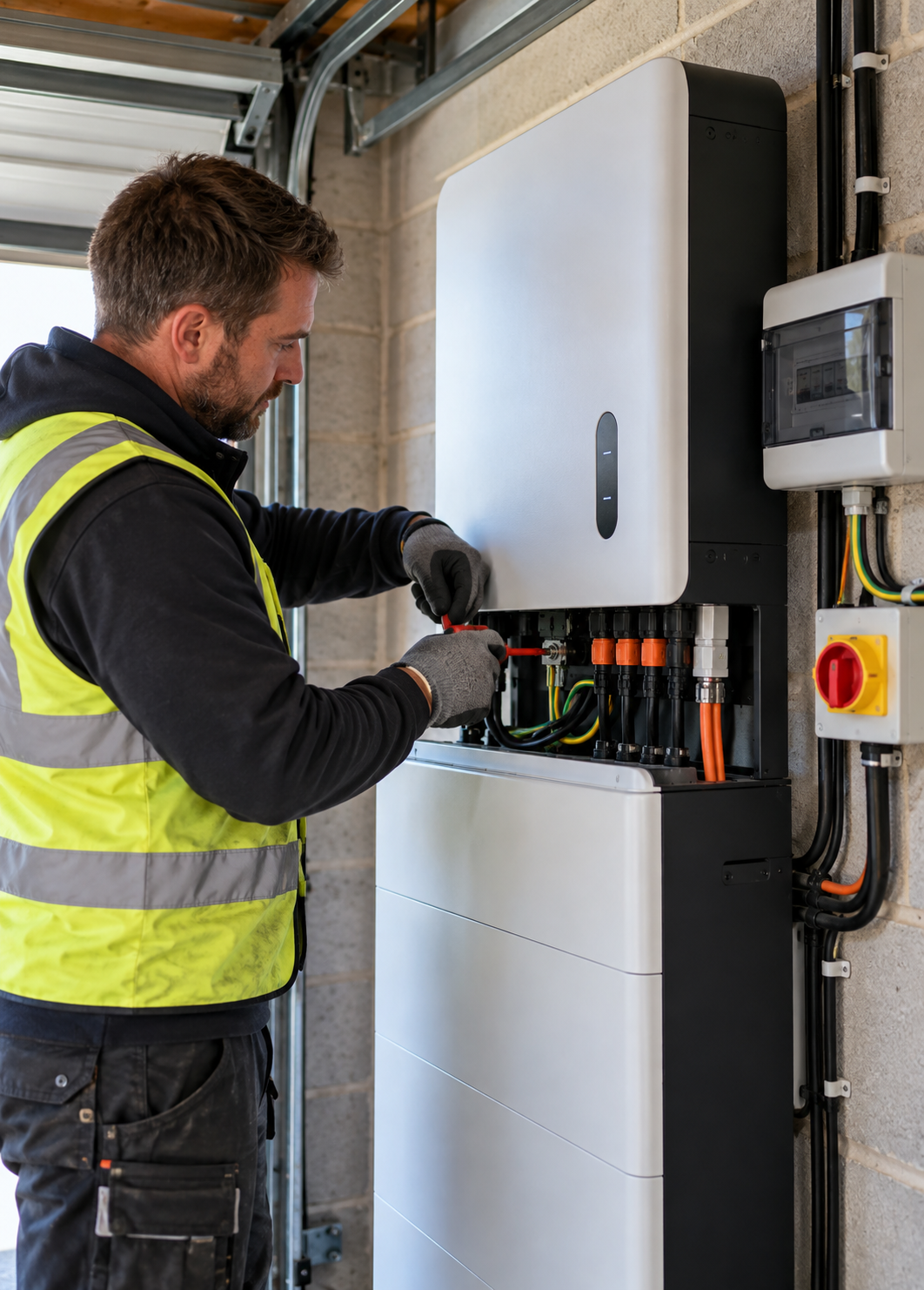
As more UK households switch to electric vehicles, heat pumps and smart home technology, electricity is becoming increasingly important to everyday life. But while much of the focus is on reducing energy bills, there's another consideration: what happens when the National Grid goes down?
Solar panels and battery storage can help homeowners generate, store and manage their own electricity, reducing reliance on electricity purchased from the grid. However, not every solar or battery installation can continue supplying power during an outage.
With a suitably designed Emergency Power Supply (EPS) or home backup system, it may be possible to maintain electricity to essential household circuits, or even the entire property, when the grid supply is interrupted.
At UK Green Energy Installations, we help homeowners across Hampshire, Surrey and Berkshire explore solar panels, battery storage and compatible backup power solutions, including upgrades to suitable existing installations.
Why Home Backup Power Is Becoming More Important
The way we use electricity at home is changing.
Traditionally, a power cut might have meant losing lighting, television and a few household appliances. Today, the consequences can be considerably more disruptive.
Electric vehicles depend on electricity for charging, while heat pumps use electricity to provide heating and, in many installations, hot water. Internet connections, security systems, smart home technology and other essential equipment also require a reliable electricity supply.
As households move away from fossil fuels and towards electrification, more everyday activities depend on electricity.
This raises an important question:
If our homes are becoming increasingly reliant on electricity, shouldn't we also consider how to protect them against interruptions to the grid supply?
For households with electric heating, backup power can be particularly valuable during winter. However, operating equipment such as heat pumps during an outage requires careful consideration of electrical demand and system capacity.
Not every backup system is designed to operate high-consumption equipment. In many cases, maintaining essential circuits, such as lighting, refrigeration and communications, may be the most practical approach.
Reducing Reliance on the National Grid
Energy independence doesn't necessarily mean disconnecting from the National Grid.
For most homeowners, the objective is to reduce the amount of electricity they need to purchase while retaining the grid as an important part of their energy supply.
Combining solar panels, battery storage and intelligent energy management can help achieve this.
During daylight hours, solar panels generate electricity that can be used immediately within the home. Any surplus generation may be stored in a battery for later use or exported to the grid.
Stored electricity can then be used during the evening, overnight or at other times when solar generation is insufficient.
Some battery systems can also take advantage of off-peak electricity tariffs, charging when grid electricity is cheaper.
This can help reduce electricity costs and dependence on grid purchases, although most homes will still need grid electricity at certain times.
However, reducing reliance on the grid during normal operation is different from having backup power during a power cut.
Will Solar Panels and Battery Storage Work During a Power Cut?
One of the most common misconceptions about solar panels and battery storage is that they automatically provide electricity when the National Grid goes down.
In reality, standard grid-connected solar installations are designed to stop supplying power during a grid outage. This is an important safety measure that prevents electricity being fed into the network while engineers may be working to restore the supply.
Similarly, having a battery installed doesn't automatically mean the property will continue receiving electricity during a power cut.
To provide backup power, the system must include appropriate equipment and a correctly designed electrical configuration capable of safely isolating the property or designated circuits from the grid.
This is where Emergency Power Supply (EPS) and dedicated home backup power systems become important.
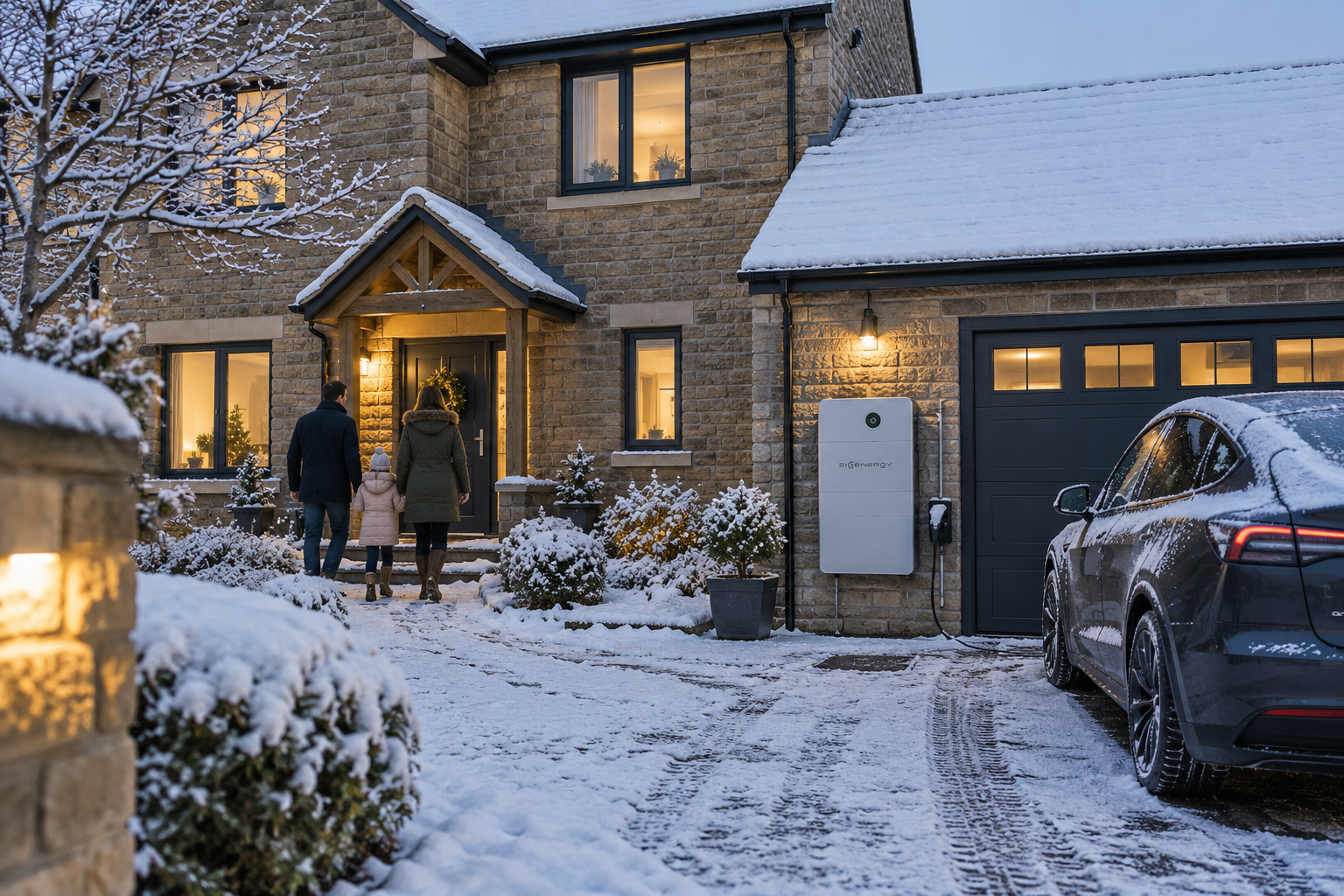
What Is an Emergency Power Supply (EPS) System?
An Emergency Power Supply, commonly referred to as EPS, allows a suitably configured solar and battery storage system to provide electricity to designated electrical circuits when the normal grid supply is unavailable.
Depending on the equipment and installation design, backup power may support selected essential circuits or potentially the entire property.
For example, a backup system could be designed to maintain power to:
Essential lighting
Refrigerators and freezers
Internet routers and communication equipment
Certain security and alarm systems
Selected heating controls or other essential electrical equipment
More demanding equipment, including heat pumps and EV chargers, may require additional battery capacity, suitable inverter output and a specifically designed backup configuration.
The duration of backup power depends on the available battery charge, connected electrical loads and whether solar generation can replenish the battery during the outage.
EPS functionality isn't included with every solar or battery installation and must be considered as part of the system design.
Essential Circuit Backup vs Whole-Home Backup
Not every homeowner needs to power their entire property during an electricity outage.
For some households, maintaining a limited number of essential circuits may provide sufficient reassurance. Others may prefer a more comprehensive backup system capable of supporting a greater proportion of their home's electrical requirements.
Essential Circuit Backup
This approach prioritises specific electrical circuits, such as lighting, refrigeration, internet connectivity and other important equipment.
By limiting the number of connected loads, it may be possible to extend the available backup duration and avoid unnecessary battery consumption.
Whole-Home Backup
A suitably designed whole-home backup system can provide electricity to the property's main electrical installation when the grid supply is interrupted.
However, whole-home backup doesn't necessarily mean every appliance can operate simultaneously or without restrictions.
The system must be designed around the property's electrical demand, inverter output, battery capacity and any equipment with high starting currents.
For example, running an electric oven, heat pump and EV charger simultaneously could exceed the capability of some backup systems.
A professional assessment helps establish which configuration is appropriate for the property and how backup power should be managed.
Can You Add Backup Power to an Existing Solar or Battery System?
Homeowners who already have solar panels or battery storage may not need to replace their entire installation to benefit from greater energy resilience.
Depending on the equipment already installed, it may be possible to upgrade the system.
Adding More Battery Storage
For some existing installations, additional compatible batteries can be added to increase storage capacity.
This can be particularly useful where household electricity consumption has increased since the original installation, perhaps following the introduction of an electric vehicle, heat pump or other electrical equipment.
Additional storage can help households retain more solar-generated electricity or make greater use of off-peak charging.
However, battery expansion depends on the manufacturer, existing equipment, battery condition and system configuration. Not every installation can be expanded.
Adding Backup Power to an Existing System
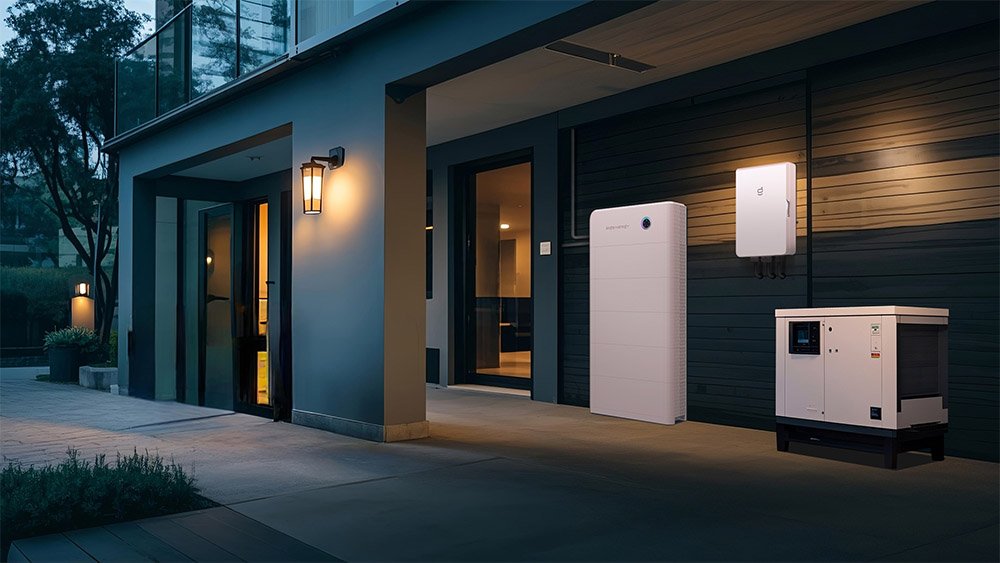
Some existing battery installations can also be upgraded to provide backup functionality.
A good example is the Sigenergy Energy Gateway.
For homeowners with a compatible existing Sigenergy SigenStor installation, it may be possible to add a Sigenergy Energy Gateway to introduce backup power functionality.
The Gateway works with compatible Sigenergy equipment to safely manage the transition between normal grid operation and backup supply during an outage.
Depending on the system capacity and electrical design, this can provide backup power to selected circuits or potentially the whole property.
The Sigenergy Energy Gateway is designed for compatible Sigenergy systems. It is not a universal retrofit solution for solar and battery installations from other manufacturers.
Other manufacturers may offer their own backup solutions, so existing installations should be assessed individually to establish what upgrades are technically possible.
Planning for Electric Vehicles and Heat Pumps
If you're planning to install an electric vehicle charger or heat pump, it's worth considering how these technologies may change your household electricity consumption.
Both can increase the amount of electricity required by a property, although the impact will depend on factors such as vehicle mileage, heating demand, property insulation and usage patterns.
Solar panels and battery storage can help manage some of this additional demand by allowing homeowners to use more of their own generated electricity or take advantage of lower-cost electricity tariffs.
However, there's an important distinction between supporting these technologies during normal operation and powering them during a grid outage.
Heat Pumps and Backup Power
Heat pumps require electricity to operate, meaning a power cut can interrupt heating and potentially hot water.
A suitably designed backup system may be able to support a heat pump, but the electrical demand, starting characteristics and any supplementary heating elements must be considered.
Some installations may be better suited to maintaining essential electrical services rather than attempting to operate the full heating system during an outage.
EV Charging During a Power Cut
Electric vehicle charging can place a substantial demand on a battery backup system.
Although certain configurations may support EV charging during an outage, this isn't a standard feature of all backup installations.
For many homeowners, preserving stored electricity for essential household requirements will be a higher priority than charging a vehicle during a power cut.
Discussing these requirements during the design stage helps ensure the system is appropriate for both current and future needs.
Should You Consider Backup Power When Installing Solar and Batteries?
If you're planning a new solar panel and battery storage installation, it's worth discussing backup power during the initial design stage.
Even if you don't require EPS functionality immediately, understanding the available options may help you select equipment that supports your future requirements.
For example, homeowners planning to install an electric vehicle charger or heat pump may benefit from considering how their electricity consumption could change over the coming years.
Similarly, those working from home or relying on essential electrical equipment may place greater importance on maintaining power during an outage.
A well-designed system should consider both current and anticipated electricity demand, alongside the practical and financial implications of adding backup capability.
Why Choose UK Green Energy Installations?
At UK Green Energy Installations, we understand that every property has different electricity requirements.
Whether you're considering solar panels for the first time, expanding an existing battery system or exploring home backup power, our approach is based on finding a suitable solution for your property and energy consumption.
30+ years of electrical experience: Extensive experience across electrical installations and renewable energy systems.
In-house installation engineers: Experienced professionals carrying out installation work.
Manufacturer-independent advice: We work with a range of established solar and battery storage manufacturers.
NICEIC and MCS accredited: Professional electrical and renewable energy installation standards.
System design and energy modelling: Solutions developed around electricity consumption, available generation and storage requirements.
Ongoing support and aftercare: Assistance beyond the initial installation.
We install solar panels, battery storage and compatible backup power solutions across Hampshire, Surrey and Berkshire.
Frequently Asked Questions About Home Battery Backup and EPS
Can solar panels power my home during a power cut?
Standard grid-connected solar panels normally stop supplying electricity during a grid outage for safety reasons. However, solar panels may continue supplying a properly configured backup system when paired with compatible equipment and suitable grid isolation.
Will my battery automatically work during a power cut?
Not necessarily. Many battery systems operate only while the grid is available. To supply electricity during an outage, the installation must have compatible backup functionality and the necessary electrical configuration.
Can I add EPS to an existing solar installation?
Possibly. Some existing solar and battery systems can be upgraded with manufacturer-compatible backup equipment. Whether this is possible depends on the inverter, battery, system architecture and electrical installation.
Can I add a Sigenergy Energy Gateway to my existing system?
If you already have a compatible Sigenergy installation, it may be possible to retrofit a Sigenergy Energy Gateway to provide backup functionality. A technical assessment is required to confirm compatibility and the necessary electrical work. The Gateway is not a universal solution for other battery brands.
Can I add more batteries to my existing solar system?
Many modular battery systems support additional storage capacity, but this depends on the manufacturer's requirements and the existing installation. An installer should check compatibility, expansion limits and the condition of the current equipment.
Will my heat pump work during a power cut if I have battery storage?
It may be possible, but only if the backup system has been specifically designed to support the heat pump's electrical demand, including any starting currents or supplementary heating loads. Smaller backup systems may be suitable only for essential circuits.
Can I charge my electric car during a power cut?
Some suitably designed systems may support EV charging during a grid outage, but this is not standard functionality. EV charging can consume substantial power and may rapidly deplete the available battery capacity. Many backup configurations therefore exclude EV chargers or limit their operation.
How long will a battery provide backup power?
This depends on the battery's available charge, usable capacity and electricity consumption. For example, a battery with 9 kWh of usable energy could theoretically supply a constant 1 kW load for approximately nine hours, before allowing for conversion losses and other system limitations. Solar generation may extend the duration where supported by the backup system.
Does having solar panels and battery storage mean I'm independent of the National Grid?
Not necessarily. Solar and battery storage can substantially reduce the amount of electricity purchased from the grid, but most UK homes will still rely on grid electricity at certain times. Energy independence and backup power are related benefits, but they are not the same thing.
Is home battery backup worth considering if electricity prices fall?
Potentially, yes. Backup power provides a different benefit from financial savings. Its primary purpose is to maintain an electricity supply during an outage, which may become increasingly valuable as households rely on electricity for more everyday activities.
Planning for a More Electrified Future
As more households adopt electric heating, electric vehicles and connected home technology, the importance of a reliable electricity supply continues to grow.
Homeowners may want to consider not only how much electricity they consume and what it costs, but also how resilient their electricity supply is.
Solar panels, battery storage and appropriately designed backup systems can help households take greater control of their energy use.
For some, that may mean installing solar and batteries for the first time. For others, it could involve expanding an existing battery system or exploring compatible backup power upgrades.
The right solution will depend on the property, existing equipment, electricity consumption and individual priorities.
Looking to Improve Your Home's Energy Independence?
At UK Green Energy Installations, we design and install solar panels, battery storage and compatible backup power solutions across Hampshire, Surrey and Berkshire.
Whether you're considering a new installation, additional battery capacity or upgrading an existing compatible system to provide backup power, our team can help assess your options.
Contact UK Green Energy Installations to discuss a solution designed around your property, electricity consumption and future energy requirements.
Call 0333 577 5229.