
Could a home battery keep your lights on, fridge running and internet connected during a power cut?
For many homeowners, battery storage is becoming about more than reducing electricity bills. It's also about knowing that, if the electricity supply fails, essential parts of the home can continue operating.
But how much battery storage do you actually need? How long could it last? And can you choose which appliances receive electricity rather than trying to power the entire house?
The good news is that modern battery storage systems can be designed to provide backup power during an outage. However, not all batteries automatically work during a power cut, and the right solution depends on your home's electrical requirements.
At UK Green Energy Installations, we design and install battery storage and backup power solutions for homeowners across Hampshire, Surrey and Berkshire.
Here's what you need to know before investing.
Will a Home Battery Work During a Power Cut?
Not necessarily.
A standard grid-connected solar panel or battery storage system will normally stop supplying electricity to your home when the grid fails. This is an important safety feature that prevents electricity being fed back into the network while engineers may be working on it.
To continue powering your home during an outage, you need a battery system specifically designed and configured for backup power.
Depending on the equipment, this may involve:
A compatible battery storage system and inverter.
A gateway or automatic changeover device that safely disconnects your home from the electricity grid.
An Emergency Power Supply (EPS) or equivalent backup function.
Suitable electrical distribution arrangements for the circuits you want to keep operating.
Some systems switch over automatically, while others require manual intervention. The changeover time also varies, so uninterrupted power to sensitive equipment should never be assumed.
The important thing is to specify backup power when designing your battery installation, rather than assuming it comes as standard.
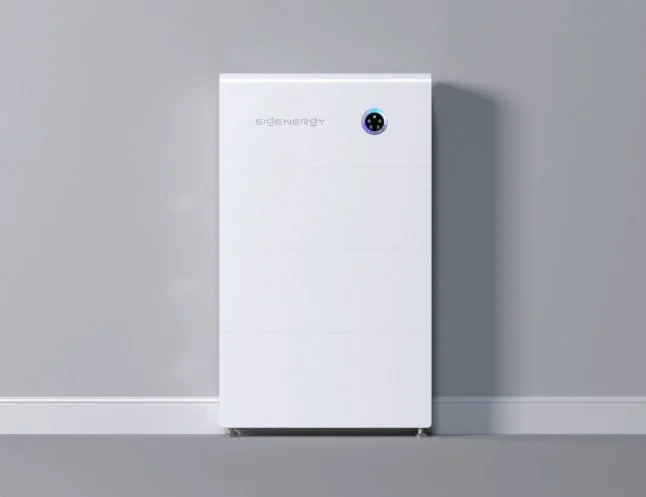
What Can a Home Battery Power During a Power Cut?
This is one of the most important questions to consider.
You may not need to power your entire house during an outage. Instead, you could prioritise the appliances and circuits that make the biggest difference to your comfort and safety.
For example:
| Household Equipment | Typical Power Demand |
|---|---|
| Broadband router | 10–20 W |
| LED lighting (several lights) | 30–100 W |
| Fridge-freezer | 50–150 W |
| Television | 60–150 W |
| Laptop | 30–100 W |
| Gas boiler controls and pump | 50–150 W |
| Kettle | 2,000–3,000 W |
| Electric oven | 2,000–3,000 W |
| Electric shower | 7,000–10,500 W |
Figures are illustrative. Actual electricity consumption varies depending on appliance specifications, operating cycles and usage. Refrigeration and heating equipment may also have higher start-up power requirements.
These are illustrative power ratings. Actual consumption, cycling, start-up demand and appliance specifications vary.
As you can see, there is a significant difference between keeping a few essential appliances running and powering high-demand equipment such as electric showers, ovens or heating systems.
A battery system designed to support essential circuits could therefore provide useful backup for considerably longer than one supplying the whole property.
Can I Separate Essential and Non-Essential Appliances?
Yes, and this is often one of the most practical ways to design a home backup power system.
Rather than supplying every electrical circuit during an outage, your installation can be designed to prioritise the circuits you need most.
For example, you might choose to maintain power to your fridge-freezer, selected lighting, broadband router, boiler controls and a few sockets.
Meanwhile, high-consumption equipment could remain disconnected from backup power.
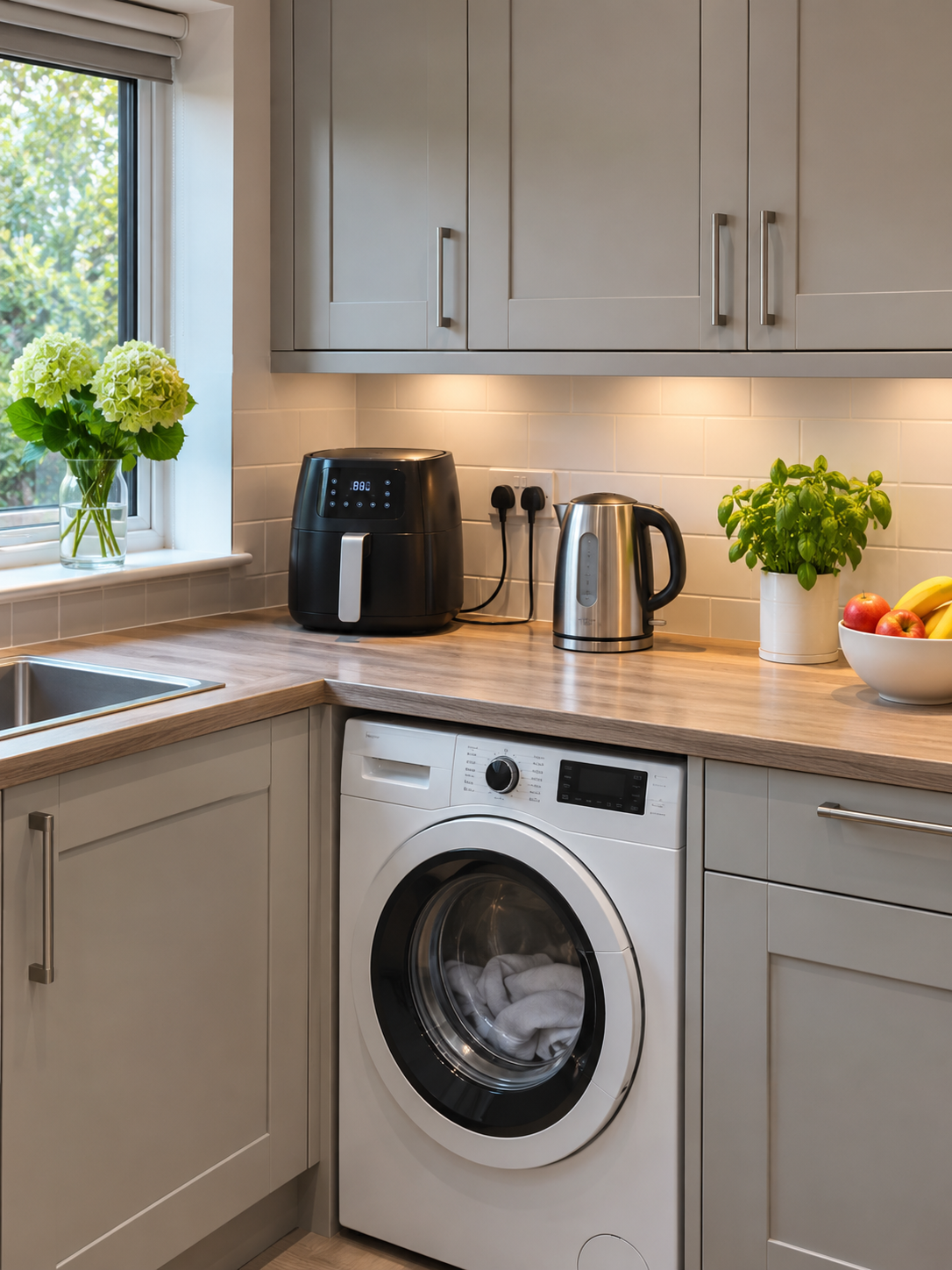
How does this work?
One approach involves separating selected essential circuits from non-essential circuits within the property's electrical distribution system.
Your installer may recommend a dedicated essential-loads consumer unit, sometimes called a backup distribution board.
When the grid is operating normally, your home uses electricity as usual.
If a power cut occurs, a compatible backup system safely isolates the property from the grid and supplies the designated essential circuits using stored battery energy.
Non-essential circuits remain without power until the normal electricity supply returns.
This arrangement helps prevent unnecessary electricity consumption and reduces the risk of high-demand appliances overloading the backup system.
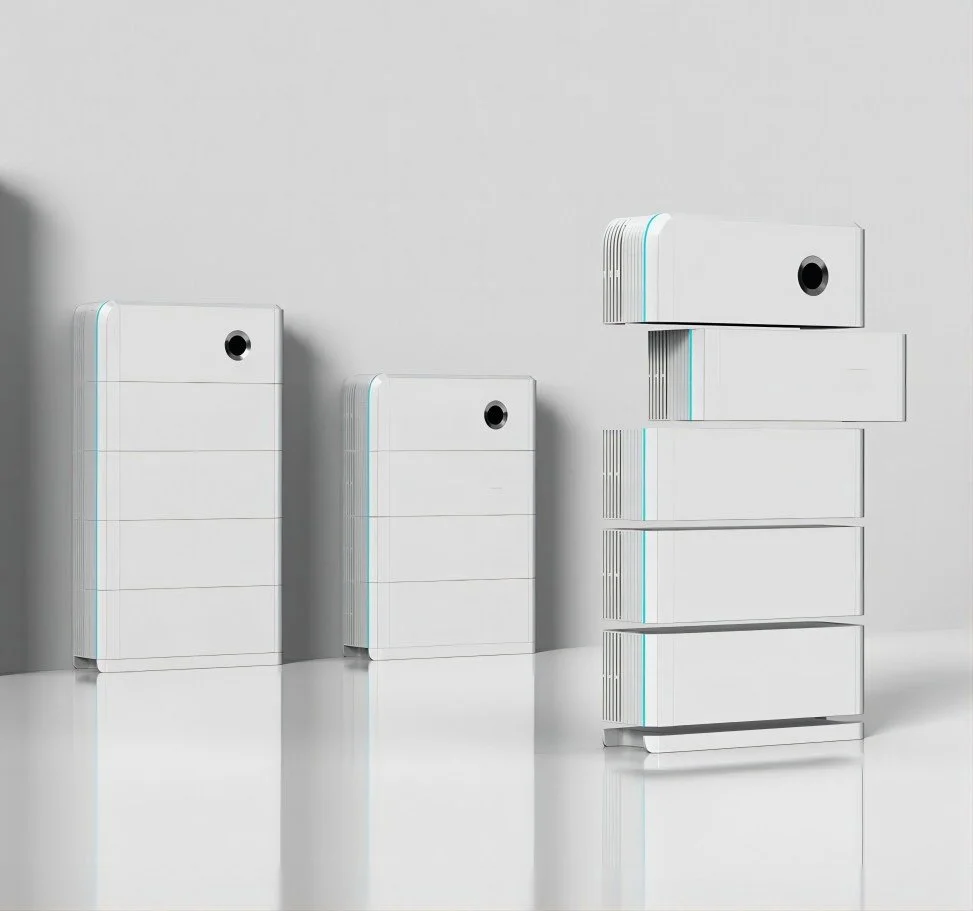
What would I normally keep running?
Essential circuits might include:
Selected downstairs and upstairs lighting.
Fridge and freezer.
Broadband router and Wi-Fi equipment.
Gas boiler controls and circulation pump.
Selected sockets for charging phones and laptops.
Security or other essential household systems.
Non-essential circuits might include:
Electric oven and hob.
Electric shower.
Tumble dryer and washing machine.
EV charger.
Immersion heater.
Other high-consumption appliances.
These are examples rather than fixed rules. Every household has different priorities, and the existing wiring determines how circuits can be separated.
Some backup systems can support more of the property, or potentially the whole home, but this requires appropriate inverter capacity, electrical design and load management.
What Size Battery Do I Need for Power Cuts?
Battery capacity is measured in kilowatt-hours (kWh). This tells you how much energy a battery can store.
For example, a 10 kWh battery can theoretically supply 1 kW of electricity for 10 hours.
In practice, the usable capacity may be lower because of battery reserve settings, conversion losses and the battery's state of charge when an outage begins.
As a general starting point:
| Battery Capacity | Potential Backup Requirement |
|---|---|
| Around 5 kWh | Shorter outages with a limited number of essential appliances. |
| Around 10 kWh | Longer backup for selected household circuits. |
| Around 15 kWh | Greater flexibility for larger households or longer outages. |
| 20 kWh or more | Higher energy requirements or extended backup periods. |
These are general illustrations rather than recommended system sizes. The appropriate battery capacity depends on household electricity consumption, essential circuits, required backup duration and inverter output. A professional assessment is recommended.
These are broad illustrations, not recommended system sizes.
A larger battery does not automatically mean you can run more powerful appliances. The inverter's maximum output, measured in kilowatts (kW), also determines how much electricity can be supplied at once.
For example, a 15 kWh battery connected to a 5 kW backup inverter cannot necessarily support appliances demanding 8 kW simultaneously.
This is why both battery capacity and power output need to be considered.
How Long Will a Home Battery Last During a Power Cut?
The answer depends primarily on three things:
How much usable energy is available in the battery when the outage begins.
How much electricity your appliances consume.
Whether your solar panels can recharge the battery during the outage.
Example: A 10 kWh Home Battery
Imagine you have a 10 kWh battery and only want to power essential appliances.
For illustration, assume 8 kWh of energy is available for use after allowing for reserve and conversion losses.
| Average Electricity Demand | Approximate Backup Duration |
|---|---|
| 200 W – very light essential use | 40 hours |
| 400 W – modest essential use | 20 hours |
| 800 W – several appliances operating | 10 hours |
| 1,500 W – higher household demand | 5.3 hours |
| 3,000 W – substantial demand | 2.7 hours |
Calculations assume a 10 kWh battery with 8 kWh of energy available for backup, a constant average electrical load and no additional solar generation. Actual backup duration will depend on battery charge level, system efficiency, equipment specifications and household usage.
These calculations assume a constant average load, 8 kWh available to supply it and no additional solar generation. Actual backup duration will vary.
Why does electricity consumption matter so much?
Consider two households with identical batteries.
The first uses electricity carefully, keeping only lighting, refrigeration and broadband running.
The second continues using multiple televisions, kitchen appliances and other equipment.
Although both homes have the same storage capacity, the second household could exhaust its available battery energy much sooner.
This is why identifying essential circuits can be just as important as choosing the battery itself.
How Much Does Battery Storage with Backup Power Cost?
The cost depends on battery capacity, manufacturer, inverter configuration, backup equipment and the complexity of the electrical installation.
As a broad guide, UK home battery storage installations can cost several thousand pounds, with larger systems generally costing more.
For an indication of the battery element, Energy Saving Trust cites approximately £4,600 for a 5 kWh battery storage system, although actual installation prices vary.
Backup power functionality may involve additional costs, including:
A compatible gateway or changeover system.
Additional electrical protection and isolation equipment.
A dedicated essential-loads consumer unit, where appropriate.
Alterations to existing circuits and electrical distribution.
Additional installation, testing and commissioning.
A system providing backup to selected essential circuits may be less complex than one designed to support the entire property.
At UK Green Energy Installations, we assess the existing electrical installation and discuss the appliances you want to keep running before recommending a suitable solution.
This allows us to provide a quotation based on your actual requirements rather than simply recommending the largest battery available.
Can Solar Panels Recharge My Battery During a Power Cut?
Potentially, yes.
With a suitably designed and compatible solar PV and battery backup system, solar panels may continue generating electricity while the property is disconnected from the grid.
This electricity can help supply household appliances and recharge the battery.
However, this functionality is not available with every solar and battery combination.
It depends on the inverter, battery, gateway configuration and how the solar installation has been integrated.
Even with a compatible system, solar generation will vary according to the weather, season and available daylight.
During winter, shorter days and lower solar output mean you should not assume that solar panels will generate enough electricity to keep your home running indefinitely.
Do I Need Solar Panels to Have Battery Backup?
No.
A home battery can be installed without solar panels.
The battery can charge using electricity from the grid, potentially taking advantage of cheaper off-peak electricity tariffs.
Under normal conditions, the stored electricity can be used later in the day when electricity prices may be higher.
If the system has been designed with suitable backup functionality, the stored energy can also be available during a power cut.
This makes battery-only installations worth considering for homeowners who want backup power but do not currently have solar panels.
However, without solar generation or another compatible charging source, the battery cannot recharge from the grid while the electricity supply is unavailable.
Can My Existing Battery Be Upgraded to Provide Backup Power?
Possibly.
If you already have solar panels or a battery storage system, it may be possible to introduce backup functionality without replacing everything.
However, this depends on the equipment already installed.
Some systems can accommodate an additional gateway or backup interface, while others may require significant changes or may not support backup functionality at all.
Before recommending an upgrade, we would assess:
The make and model of your existing inverter and battery.
Whether backup operation is supported by the manufacturer.
Your existing electrical distribution arrangements.
The circuits you want to maintain during an outage.
Whether additional battery capacity is required.
An assessment can help establish whether upgrading your existing installation is technically practical and cost-effective.
What About Heat Pumps and Electric Vehicles?
Homes with heat pumps and electric vehicles often have higher electricity requirements.
However, that does not necessarily mean you need to provide backup power to everything.
For example, an EV charger could be excluded from the backup circuits to avoid placing a substantial load on the battery during an outage.
Heat pumps require more careful consideration.
Although some systems may be capable of supporting a heat pump, the electrical demand, compressor start-up requirements, auxiliary heaters and available inverter output must all be assessed.
For some households, prioritising selected lighting, refrigeration and communications may be more practical than attempting to maintain full electric heating throughout an extended outage.
The right approach depends on your property, your priorities and the available backup capacity.
Can I Keep Some Battery Energy Reserved for Emergencies?
With many modern battery storage systems, yes.
Some systems allow homeowners to configure a minimum battery reserve so that a proportion of the stored energy remains available for backup power.
For example, you might choose to retain a percentage of your battery capacity rather than using all the available energy for everyday household consumption.
This can provide greater reassurance, particularly during periods of unsettled weather.
However, maintaining a larger reserve also reduces the amount of stored electricity available for everyday energy savings.
Some systems also offer additional energy management features that can adjust charging behaviour according to tariffs or weather information.
Available functionality depends on the equipment, software and system configuration.
How UK Green Energy Installations Designs Home Battery Backup Systems
There is no single battery size or backup configuration that suits every property.
At UK Green Energy Installations, we take a practical approach to system design.
We consider your household electricity consumption, existing solar or battery equipment, electrical distribution arrangements and the appliances you want to maintain during a power cut.
Where appropriate, we can assess the electrical loads and recommend how essential and non-essential circuits could be managed.
We then consider suitable battery capacity, inverter output, backup equipment and installation requirements.
As a manufacturer-independent installer, we can recommend equipment based on the requirements of your property rather than relying on a single battery manufacturer.
Our aim is to provide a system that is appropriately designed, safe and practical for everyday use as well as occasional power cuts.
Frequently Asked Questions About Battery Storage and Power Cuts
Will my battery automatically switch on during a power cut?
Only if your system has been designed and configured to provide automatic backup power. Some systems use an automatic gateway or changeover device, while others require manual switching. Changeover times vary depending on the equipment installed.
Will my whole house have electricity during a power cut?
Not necessarily. Some battery backup systems support selected essential circuits, while others can be designed to supply more of the property. The available inverter output, battery capacity and electrical configuration determine which appliances can operate.
Is a 10 kWh battery enough for a power cut?
A 10 kWh battery could provide many hours of backup for selected essential appliances. However, the duration depends on how much usable energy is available, the battery's state of charge and how much electricity your household consumes during the outage.
Can I run my fridge and freezer from a home battery?
Yes, provided the relevant circuits are included in the backup arrangement and the system can accommodate the appliances' operating and start-up power requirements.
Can I run my boiler during a power cut?
A gas boiler's electrical controls and circulation pump may be supported by a suitably designed battery backup system. The boiler's electrical supply and any associated equipment must be assessed to confirm compatibility.
Can I use my electric oven or kettle during an outage?
Potentially, if your system has sufficient backup output and the relevant circuits are supported. However, high-power appliances consume stored energy quickly and may exceed the system's available output.
Will my solar panels work during a power cut?
Ordinary grid-connected solar systems generally stop supplying electricity during an outage. A suitably designed solar and battery backup system may allow solar generation to continue while safely disconnected from the grid.
How long can a battery power my home without solar panels?
It depends on the battery's available capacity and your electricity consumption. Without solar generation or another compatible charging source, backup power will end when the available stored energy is exhausted.
Can I add backup power to an existing solar installation?
Sometimes. It depends on the compatibility of your inverter, battery and existing electrical installation. A site assessment is recommended before making any changes.
Is battery backup the same as a UPS?
No. Some battery backup systems involve a brief interruption when switching from grid electricity to stored energy. Equipment requiring genuinely uninterrupted power may still need a dedicated uninterruptible power supply (UPS).
Considering Battery Storage for Power Cuts?
Whether you want to keep a few essential appliances running or explore a more comprehensive home backup solution, the starting point is understanding your electricity requirements.
UK Green Energy Installations designs and installs battery storage, solar PV and backup power solutions for homeowners across Hampshire, Surrey and Berkshire.
We can help you understand:
What size battery may be appropriate for your home.
Which appliances and circuits could receive backup power.
How long your available battery energy might last.
Whether your existing solar or battery installation can be upgraded.
What equipment and installation work would be required.
Contact UK Green Energy Installations to arrange a site survey and discuss a battery backup solution tailored to your home.
Call 0333 577 5229 or contact us through our website.
Important information: Battery capacities, appliance consumption, backup durations and costs provided in this article are illustrative. Actual performance depends on equipment specifications, usable battery capacity, electrical demand, system configuration and installation conditions. Backup systems must be designed and installed by appropriately qualified professionals and cannot be assumed to provide uninterrupted power or support every household appliance.