Choosing a Tethered or Untethered Zappi EV Charger?

The Zappi EV Charger is designed in either a tethered or untethered model. Choosing a tethered or untethered Zappi depends on personal preference. Below are a couple of points you might want to consider before making your decision.

Positives on untethered EV chargers

  1. Aesthetics - there is no lead left hanging around and looking untidy when the charger is not in use

  2. Connection - whoever is using the charger can use their own lead (supplied with the car), so your lead and your responsibility

  3. Length - if you need a longer or shorter lead you can buy one to suit your car / parking position and location

  4. Replacement lead - if the lead gets damaged you can simply buy another lead without the need to hire an electrician to replace it.

Positives on tethered EV chargers

  1. Location - as the lead is tethered to the charger, you will always know where the lead is

  2. Time saver - when you’re in a hurry and time is of the essence, you can plug your tethered lead straight into the car

  3. Quality - as the lead is permanently tethered to the charger, it is less likely to get damaged.

Other considerations

Black, white, tethered or untethered - you choose…

New Heights at Pedal Heaven

Dedicated bike shops on our high streets are thinking ahead and prioritising the health and safety of their staff, as well as diversifying to stay ahead of the latest trends. A recent growing trend in electric mountain bikes requires store staff to train up on servicing and maintaining every aspect of these new bikes. As they are battery assisted, they also weigh significantly more than most bikes sold on the high street in 2021.

We were recently asked by Pedal Heaven in Fleet, Hampshire to install a new electric work stand for their workshop. The new bike stand lifts the bikes up (electronically) to a safe working height for repairs and servicing, ensuring the health and safety of their staff is a priority.

Check out this short video

New Heights at Pedal Heaven

We Are Delighted to Share Our New Video

We are delighted to share our new video designed to provide an overview of the different installations we offer including: EV charging for both domestic and commercial environments, Solar PV installation, and battery storage.

Free-to-use versus Smart Chargers

Manufactures of car chargers have different terminology for their products with the main differences based on the technology incorporated in them. In this blog post we have separated the main types of EV chargers (Smart Chargers and Free-to-Use), along with the advantages and disadvantages.

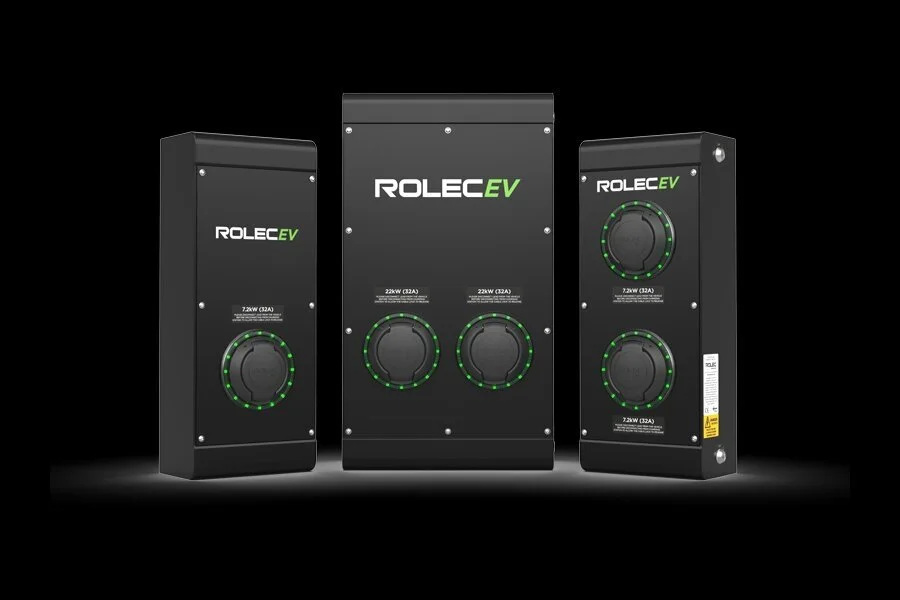
Floor mounted OCPP EV charger from Rolec

Floor mounted OCPP EV charger from Rolec

Smart Chargers / OCPP (Open Charge Point Protocol)

OCPP (Open Charge Point Protocol) - is simply a language that allows compliant EV charging points and back-office management systems to communicate seamlessly with one another. OCPP is a popular, worldwide industry-wide standard, allowing interoperability between EV charging points, back-office management systems and electric vehicles.

How does the ‘smart’ technology work?

Smart chargers or OCPP chargers are centred around connectivity, using either a SIM card like a mobile phone or a connected data cable, usually Cat5e (or more recently Cat6) that will wire into your local network.  Most of these systems will use an app or SSID card to let the charger know who is using it and how the payment will be made if applicable.

What is the main benefit of ‘smart’ technology?

All this communication technology allows the operator to monitor the current state of charge and availability.  This is particularly important if this is a public facing charger, or if it is installed at an office where usage can be monitored and charged accordingly i.e. with tariffs setup for different users ranging from visitors to the CEO and office staff.

This floor mounted pedestal range (pictured on the right) of EV chargers from ROLEC are robust and ideal for commercial use.

Read more

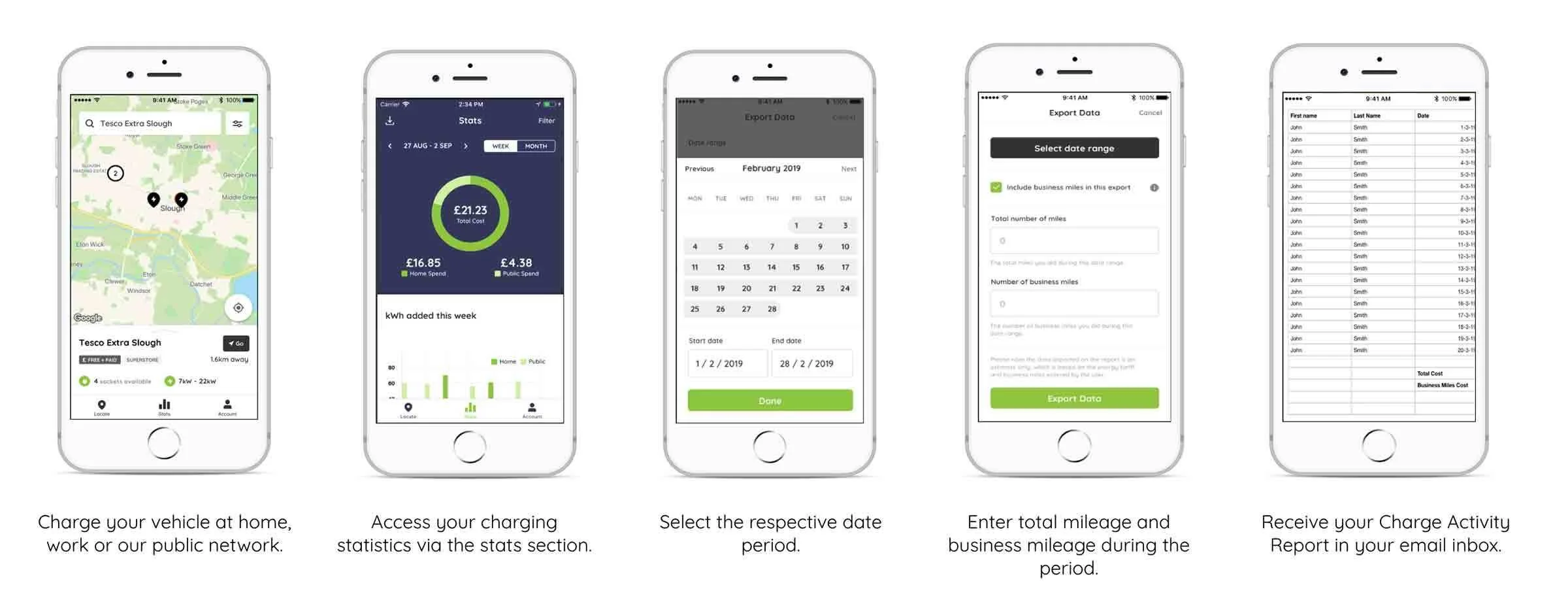
The image below is an example of what the smart charger app looks like with the Pod Point EV charger.

Read more

Some of the advantages and disadvantages of OCPP include:

Advantages

✔ Eligible for grant funding

✔ Ability to set user tariffs

✔ Remote locking of the charger

✔ Track usage from each user

✔ Remote analysis of current state also indication of any faults

Disadvantages

✘ Cost - usually more expensive than Free-to-Use EV Chargers

✘ Advanced configurability - takes longer to setup

✘ If the charger is not working, the only way to check the charger is a site visit

Free-to-Use or Payment Charged

Different companies may have specific names for their products like Rolec for example - EV FTU (free to use) or free-to-charge.

This type of charger has no communication built in and is activated by a standard key (2 keys supplied with Rolec as standard)

The EV FTU is not a charger that will appear on the list of OZEV approved units from July 2019.

https://www.gov.uk/government/news/government-funded-electric-car-chargepoints-to-be-smart-by-july-2019

All government funded home charge points for electric vehicles must use innovative ‘smart’ technology from July 2019, the government announced today (14 December 2018), fulfilling the commitment in the Road to Zero Strategy published earlier this year.

Securicharge_range.jpg

The Free-to-use charger from Rolec above is idea for an organisation that wants to benefit from simple functionality with a key that provides access.

Find our more

Some of the advantages and disadvantages of Free-to-use include:

Advantages

✔ Keeps everything simple – only a key to activate it

✔ Less technology meaning less to go wrong

Disadvantages

✘ Not eligible for grant funding

✘ Keys can be misplaced or taken away and not returned

✘ Not possible to remote monitor the state of the charger (in use/ out of order)

This means charge points must be able to be remotely accessed, and capable of receiving, interpreting and reacting to a signal. Smart charging can also reduce high peaks of electricity demands, minimising the cost of electric vehicles to the electricity system – and keeping costs down for consumers by encouraging off-peak charging.

All Tools Deliver the Best Outcomes

UK Green Energy Installations utilise all the tools available for Solar PV surveys to ensure they obtain all of the exacting information required to make assessments and reports. Tools for Solar PV surveys include utilising drones to assess the roof, which provides information from a safety perspective for access, as well as providing a comprehensive view of the roof for maximum capacity.