

Discover why solar quotes can vary so much and what homeowners should look for when comparing solar panel and battery storage installers. Learn how workmanship, equipment quality and aftercare can affect long-term value.
Can Solar Panels Really Help Pay for a Heat Pump?
Many homeowners are now exploring renewable heating options and wondering if solar power can offset the cost of installing a heat pump.
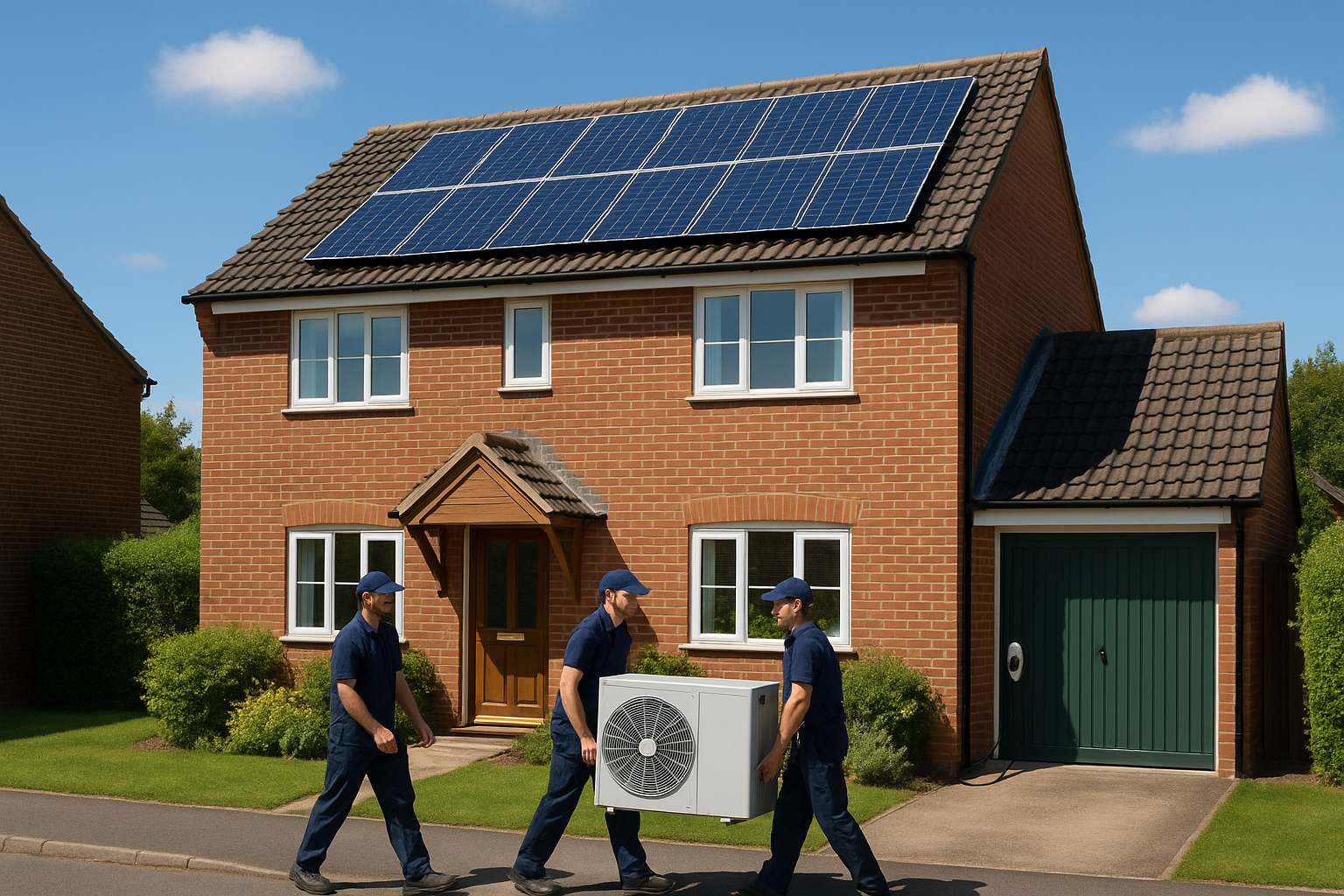
The short answer is yes — but only partially. Solar doesn’t pay for a heat pump outright, but it can significantly reduce the long-term running costs, making the overall investment more manageable.
Let’s break down how it works.
Get Help from the Government Grant
Thanks to the UK Government’s Boiler Upgrade Scheme, homeowners in England and Wales can claim up to £7,500 towards installing an air-source or ground-source heat pump.
Apply for the Boiler Upgrade Scheme here
This generous grant reduces the upfront cost substantially — but most households will still have to contribute several thousand pounds towards the total installation.
How Solar Panels Make a Difference
While the BUS grant helps you install your heat pump, solar panels help you run it more affordably.
Here’s how:
A heat pump runs on electricity. Solar panels let you generate some of that power for free.
The more solar energy you use directly, the less you buy from the grid — cutting your monthly energy bills.
You can store extra power in a solar battery, helping you use solar energy even when the sun isn’t shining.
Solar and heat pumps together can add value to your home and reduce your carbon footprint.
Remember: Solar Won’t Cover Everything
It’s important to be clear — solar helps, but it won’t cover the entire cost of running a heat pump.
That’s because:
Seasonal mismatch: Solar power peaks in summer, while heat pumps use the most electricity in winter.
Roof space: Most homes can’t fit enough panels to power 100% of their heating demand.
Separate incentives: The BUS grant applies to the heat pump, not to solar panels.
Still, using solar to supply even a portion of your heat pump’s electricity can make a noticeable impact on your bills.
The Combined Savings Picture
Here’s a simple breakdown of how combining solar and a heat pump adds up:
| Cost Element | Support / Benefit |
|---|---|
| Heat Pump Installation | Up to £7,500 off via the Boiler Upgrade Scheme |
| Solar Panel Installation | Separate investment — can reduce electricity bills |
| Running Costs | Reduced thanks to solar generation |
| Long-Term Savings | Lower energy bills, lower carbon footprint, potential property value boost |
Example utilising solar and battery storage, leveraging on charging at cheaper rate.
The table below shows a combined savings of £792 if you utilise energy from solar and battery storage charging at cheaper rate compared with peak rate.
| Scenario | Assumed Coverage | Annual HP kWh from Grid | Effective Unit Price | Annual Running Cost | Saving vs Baseline |
|---|---|---|---|---|---|
| Baseline (no solar, no battery) | 0% | 3,000 | 30.0p | £900 | — |
| A) Battery on cheap rate | 100% via battery | ~0 (battery supplies) | 11.1p | £333 | £567 |
| B) Solar contribution | 25% solar (750 kWh) | 2,250 | 30.0p | £675 | £225 |
Example only: Assumes annual heat demand 9,000 kWh (heat), heat pump SCOP 3.0, standard tariff £0.30/kWh, off-peak £0.10/kWh, battery round-trip efficiency 90% (effective ~11.1p/kWh), and 4 kWp solar PV covering ~25% of the heat pump’s annual electricity (seasonality applies). Actual performance and savings vary with property fabric, system sizing, tariffs, usage profile, and weather. Standing charges and export payments are excluded.
Together, solar and heat pumps create a sustainable, lower-cost heating system for your home — especially when paired with proper insulation and smart controls.
How UK Green Energy Installations Can Help
At UK Green Energy Installations, we specialise in helping homeowners make the most of renewable technology. Our team can:
Assess your home’s suitability for solar panels and heat pumps
Calculate your likely energy savings
Design a system that fits your budget and long-term goals
In Summary
Solar panels can’t completely pay for your heat pump — but they can help power it, reduce your running costs, and increase your savings when combined with the government’s £7,500 heat pump grant.
It’s a smart, sustainable step towards lower-carbon living — and one that’s already paying off for thousands of UK homeowners.
Ready to See How Much Solar Could Power Your Heat Pump?
Find out how much solar could contribute to your heat pump’s running costs.
Our expert team can assess your home’s energy use, roof potential, and system design to show you exactly how much of your heat pump’s electricity demand could be covered by solar energy.
FAQs: Solar and Heat Pumps
Can solar panels power a heat pump completely?
Not usually — most homes won’t generate enough solar electricity in winter to cover all heating demand, but solar can significantly reduce grid electricity use in spring and summer. A well-sized solar array can make a noticeable difference to your overall running costs.
Does the government grant apply to solar panels?
No, the Boiler Upgrade Scheme grant only covers the cost of installing a heat pump. Solar panels are a separate investment, but they work hand-in-hand with a heat pump to reduce your ongoing electricity costs.
Will I need a battery to make the most of solar and a heat pump?
A battery isn’t essential, but it helps maximise the use of your solar power. By storing excess energy generated during the day, you can run your heat pump overnight or when the sun isn’t shining — improving your self-consumption and reducing reliance on the grid.
How much could solar reduce my heating bills?
On average, solar panels might cover 20–30% of a heat pump’s annual electricity needs, depending on your roof, home size, and usage pattern. In our example above, that could save around £200–£300 per year compared with running entirely on grid electricity.
Can I still get the heat pump grant if I already have solar panels?
Yes. Having solar panels does not affect your eligibility for the Boiler Upgrade Scheme, as long as your installation meets the grant requirements and is carried out by an MCS-certified installer.
How Solar Panels Work: Turning Sunlight into Sustainable Energy
Introduction
Solar panels are transforming how homes and businesses across the UK generate energy — offering a cleaner, greener, and more affordable way to power everyday life. But how exactly do solar panels work?
In this guide, we’ll explain the science behind solar power, step by step — and show how it connects to UKGEI’s renewable energy services.
1. What Are Solar Panels?
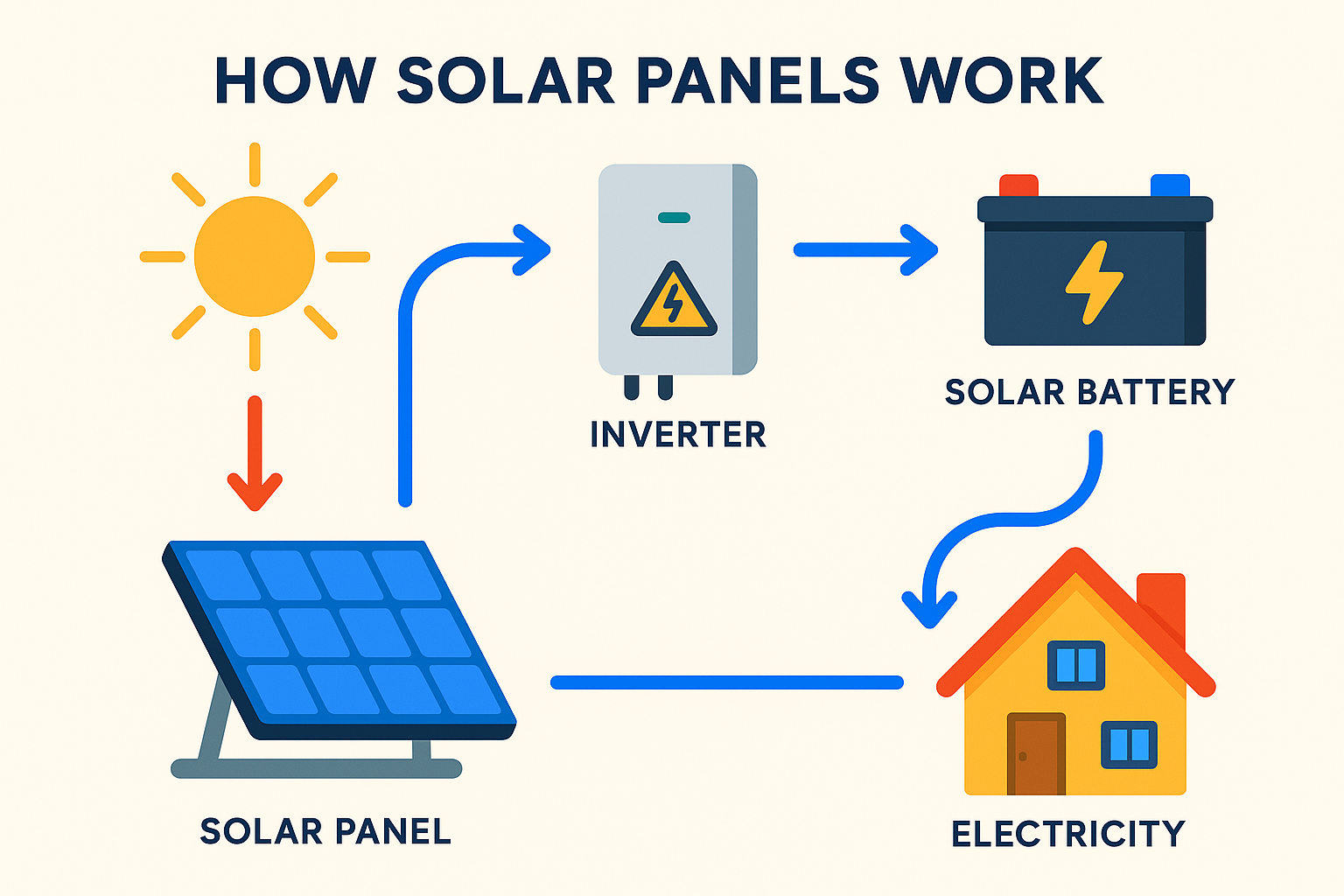
Solar panels, also known as photovoltaic (PV) panels, are devices that convert sunlight directly into electricity. Each panel is made up of multiple solar cells, typically using silicon — a semiconductor that reacts when hit by sunlight.
When sunlight hits these cells, it frees electrons inside the silicon, generating direct current (DC) electricity.
2. Converting DC to AC: The Inverter’s Role
Homes and businesses use alternating current (AC) electricity, not DC. That’s why every solar system includes an inverter, which converts the DC electricity your panels generate into usable AC power for your property.
This step makes solar energy compatible with your existing electrical systems and the national grid.
3. Storing Solar Power with Batteries
If you want to make the most of your energy — especially on cloudy days or at night — a solar battery can store the excess electricity your panels produce.
Battery storage means you rely less on the grid, reduce bills, and keep your energy clean all day long.
4. Evolving Solar Technology and Integrated Solutions
The solar industry is advancing rapidly, with new products and integrated systems emerging all the time. Many modern solar batteries now include built-in inverters or come as all-in-one hybrid units, simplifying installation and improving efficiency. There’s also a growing range of smart energy management systems that automatically optimise how and when your stored electricity is used. At UKGEI, we continuously review the latest technologies and manufacturer offerings to ensure every system we design delivers the best performance, safety, and long-term value for our customers.
5. Monitoring and Maintenance
Modern solar systems come with smart monitoring apps so you can track energy production in real time. UKGEI’s installations also include ongoing support and maintenance — ensuring your panels perform efficiently for years.
⚡ The Benefits of Solar Panels
Lower energy bills and potential income from exporting excess electricity
Reduced carbon footprint — helping meet UK net-zero goals
Energy independence — less reliance on the grid
Increased property value and appeal to eco-conscious buyers
Why Choose UKGEI?
At UKGEI, we specialise in complete solar energy solutions — from design and installation to maintenance and energy management. Our expert team works with homeowners and businesses across the UK to create efficient, cost-effective renewable systems.
👉 Learn more about our Solar Energy Services or Request a Free Quote today.
Frequently Asked Questions About Solar Panels
Do solar panels work in the UK’s cloudy weather?
Yes—solar panels generate electricity from daylight, not just direct sunshine. While output is lower on overcast days, the UK still receives enough sunlight across the year for solar to be worthwhile for many homes and businesses.
How long do solar panels last?
Most modern solar panels are designed to last 25–30 years or more. Output gradually reduces over time, but quality panels paired with a professional installation will deliver reliable performance for decades.
Do solar panels need a lot of maintenance?
Maintenance is minimal. Keeping panels clean and free from debris is usually sufficient. For peace of mind, consider a maintenance plan to check performance and system health.
Can I store solar energy for use at night?
Yes. Adding a battery storage system lets you store excess daytime generation and use it later, reducing reliance on the grid and improving self-consumption.
How much money can I save with solar panels?
Savings vary by usage, system size, roof orientation, and location. Many UK households save hundreds of pounds per year, and savings can increase when combined with battery storage and smart energy management.
Will installing solar panels increase my property’s value?
Solar can make properties more attractive to buyers by lowering running costs and improving energy efficiency, which may increase perceived value.
Can solar panels work during power cuts?
Standard grid-tied systems shut down during outages for safety. If you have battery storage with a backup or islanding feature, essential circuits can remain powered during a cut.
Are there government incentives for solar energy?
Yes. The Smart Export Guarantee (SEG) pays you for eligible surplus electricity exported back to the grid. Check current supplier tariffs and eligibility criteria before you install.
How long does installation take?
Most residential systems are installed within 1–3 days, depending on roof size, access, and system complexity. Larger or more complex projects may take longer.
How do I know if my home is suitable for solar panels?
South-facing roofs with minimal shading deliver the best results, but many orientations can work. A site survey will assess roof condition, shading, and electrical setup to recommend the right system.
Featured


Unlocking Green Finance: Greener Homes Scheme & Home Installations With Some Mortgage Providers
1. Green Mortgage Offering
Some mortgage providers in the UK now offers a discounted remortgage rate (0.10% lower) on properties with an EPC rating of A or B, available exclusively via brokers and for LTVs between 60%–85%.
In addition, its revamped Greener Homes Hub provides cashback rewards of £250 for £5,000–£9,999 borrowing and £500 for loans of £10,000 or more to fund eligible green home improvements. Partnered support includes free EPC assessments and solar installation guidance.

2. Green Cashback: How Much You Can Save
Some providers also provide borrowing options with at least £5,000 for improvements such as solar PV, battery storage, heat pumps, EV chargers, insulation, or double glazing may receive up to £1,000 cashback—including solar-specific rewards.
Lenders like Halifax and Lloyds offer up to £2,000 cashback for heat pumps, with £1,000 for solar and batteries, and £500 for insulation or glazing, though Santander caps at £1,000 for solar/battery cases.
3. Eligible Installations
Here’s what's generally covered under the schemes:
Solar PV panels (e.g., GivEnergy, MyEnergi, Tesla)
Battery energy storage systems (e.g., GivEnergy, Tesla Powerwall, MyEnergi)
EV chargers including: MyEnergi Zappi Glo, Tesla Wall Connector, Rolec, or Andersen Quartz
Installations must be completed by TrustMark-registered or MCS-certified installers, submitted within specific timelines, with final invoice documentation submitted per mortgage provider’s claim process .
4. Why Choose These Installations for Homeowners in Hampshire, Berkshire & Surrey
Lower Your Mortgage Rate
If you’re remortgaging your property (60%–85% LTV) with an A or B EPC rating, Santander will apply a 0.10% discount on the interest rate, potentially saving you hundreds in interest over time
Claim Cashback on Green Improvements
Borrow between £5,000–£9,999 and get £250 cashback, or £500 if borrowing £10,000+, potentially £1,000 for solar + battery installs—great value considering the long-term energy bill savings and carbon reduction
Improve Energy Efficiency & Home Value
Upgrading your EPC rating and installing proven green energy technologies like solar and EV chargers not only reduces bills but also enhances resale value and marketability of your home, especially as EPC-aware buyers grow.
5. Local Coverage Areas & Installer Partners
At UKGEI, we support installations across Hampshire, Berkshire, Surrey, including Guildford, Reading, Basingstoke, Farnham, Fleet, Farnborough, Camberley, Bracknell, Wokingham, Hook. We work with installers certified by MyEnergi, GivEnergy, Tesla, Andersen—all compliant with Santander’s trusted partner network.
6. Step-by-Step: How to Benefit from Santander’s Green Offer
Check your current EPC rating if B or A, you’re eligible. If not, consider improvement options.
Request quotes from certified installers (solar PV, battery storage, EV charger).
Submit mortgage/loan application—borrow £5,000+ via Santander for improvements.
Complete install and submit invoice/proof within lender’s deadline.
Claim your cashback and enjoy reduced mortgage rate & energy bills.
7. Comparison Snapshot
Feature: Example of a Greener Homes Scheme
EPC Requirement: EPC A or B (new or upgraded)
Mortgage Rate Discount: 0.10% lower for 60–85% LTV
Cashback: £250 (borrow £5–9.9k), £500 (≥£10k), up to £1,000 for solar/battery
Eligible Technologies: Solar PV, battery systems, EV chargers, insulation, glazing
8. Why It Matters
Installing brands like GivEnergy, MyEnergi, Tesla, Andersen not only aligns with current lender’s schemes but also ensures top-tier performance, long warranties, and compliance with lender requirements—so you invest in systems that are reliable, efficient, and future-proof.
Bottom Line
For homeowners in Hampshire, Berkshire and Surrey, greener home incentives offer genuine financial incentives to make green upgrades more affordable. By installing solar PV, storage or EV chargers through certified partners, buyers or remortgagors can benefit from a lower mortgage rate, cashback, and long-term savings while boosting EPC performance and reducing carbon emissions.
If you’re ready to explore quotes or need help navigating eligibility or installer options in your area, UKGEI is here to assist every step of the way!
Why Getting your Car Charger Installed with your Solar Shouldn't be Overlooked

Sarah is wearing her best smug face because she has just saved VAT on her car charger installation because she got it installed at the same time as her solar and battery storage installation. Smarty pants!
We Are Delighted to Share Our New Video
We are delighted to share our new video designed to provide an overview of the different installations we offer including: EV charging for both domestic and commercial environments, Solar PV installation, and battery storage.