Which Energy Solution Is Right for You?

Discover UKGEI’s Interactive Brand & Solution Finder

Introduction

Choosing the right renewable energy system can be a challenge. With so many technologies, brands and configurations available, how can you tell what best fits your needs?

UK Green Energy Installations (UKGEI) has launched an innovative Interactive Brand & Solution Finder, designed to make that decision simple. This intuitive online tool guides homeowners and business owners through a few quick questions to match them with the most suitable solar, battery storage, and EV charging solutions — all in just a few minutes.
Try the Interactive Brand & Solution Finder

How the Tool Works

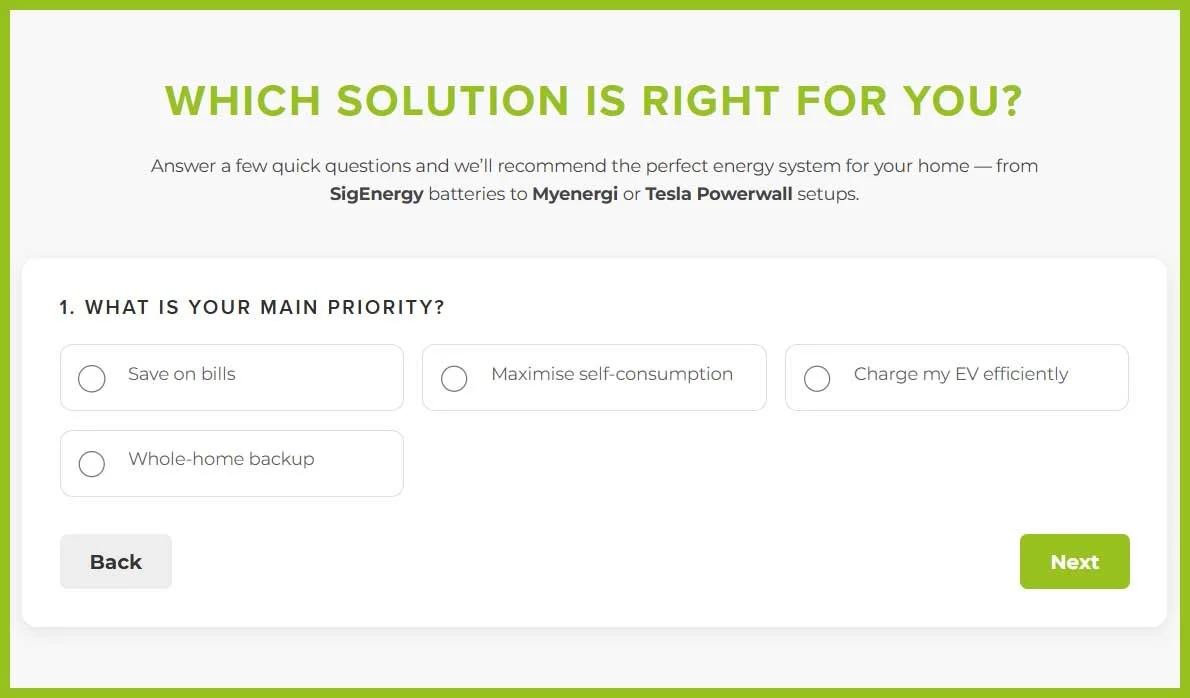
Step 1: Choose Your Main Priority

Start by identifying your goal — whether that’s saving on energy bills, maximising self-consumption, charging an electric vehicle efficiently, or achieving whole-home backup power.

Step 2: Describe Your Roof and Property

Next, you’ll specify your property type: pitched roof, flat roof, mixed/asymmetric roof, or one with partial shading. This helps the system understand your energy potential and design constraints.

Step 3: Share Your Current Setup

Do you already have solar panels or an EV charger installed? The tool factors in your existing setup so that recommendations complement, not duplicate, your equipment.

Step 4: Receive a Personalised Recommendation

Based on your responses, the tool provides a tailored system suggestion — highlighting compatible brands, technologies, and configuration options. You can then request a quote or book a consultation with the UKGEI team.

Why It Matters

Tailored to Your Needs

The solution finder delivers results based on your property and energy priorities — removing guesswork and avoiding unsuitable recommendations.

Simplifies Complex Choices

From panel wattage to inverter types, renewable systems can be technical. This tool breaks it down into an easy, guided journey.

Saves Time and Increases Confidence

By narrowing down the right options early, you can move forward confidently without endless research.

Avoids Costly Mismatches

By assessing roof orientation, shading and your current setup, the tool helps prevent choosing incompatible or inefficient products.

Benefits for Homeowners and Businesses

  • Homeowners: Identify energy-efficient systems that fit your home’s design and budget while reducing energy bills.

  • Commercial clients: Explore scalable solar and storage solutions that lower operational costs and meet sustainability goals.

  • Installers and property managers: Save time on pre-qualification by using the tool for early-stage assessments.

Why Choose UKGEI

UKGEI is a trusted renewable energy specialist working across Surrey, Hampshire and Berkshire, with extensive experience in:

The Interactive Brand & Solution Finder reflects UKGEI’s commitment to innovation and customer service — helping clients find smarter, more sustainable energy solutions quickly and confidently.

Get Started Today

Whether you’re upgrading your current system or exploring renewable energy for the first time, UKGEI’s Interactive Brand & Solution Finder is the perfect starting point.

Answer a few quick questions, get your tailored recommendation, and take the next step toward a greener, more efficient future.
USE THE solution FINDER


Can Solar Panels Really Help Pay for a Heat Pump?

Many homeowners are now exploring renewable heating options and wondering if solar power can offset the cost of installing a heat pump.

Can Solar Panels Really Help Pay for a Heat Pump?

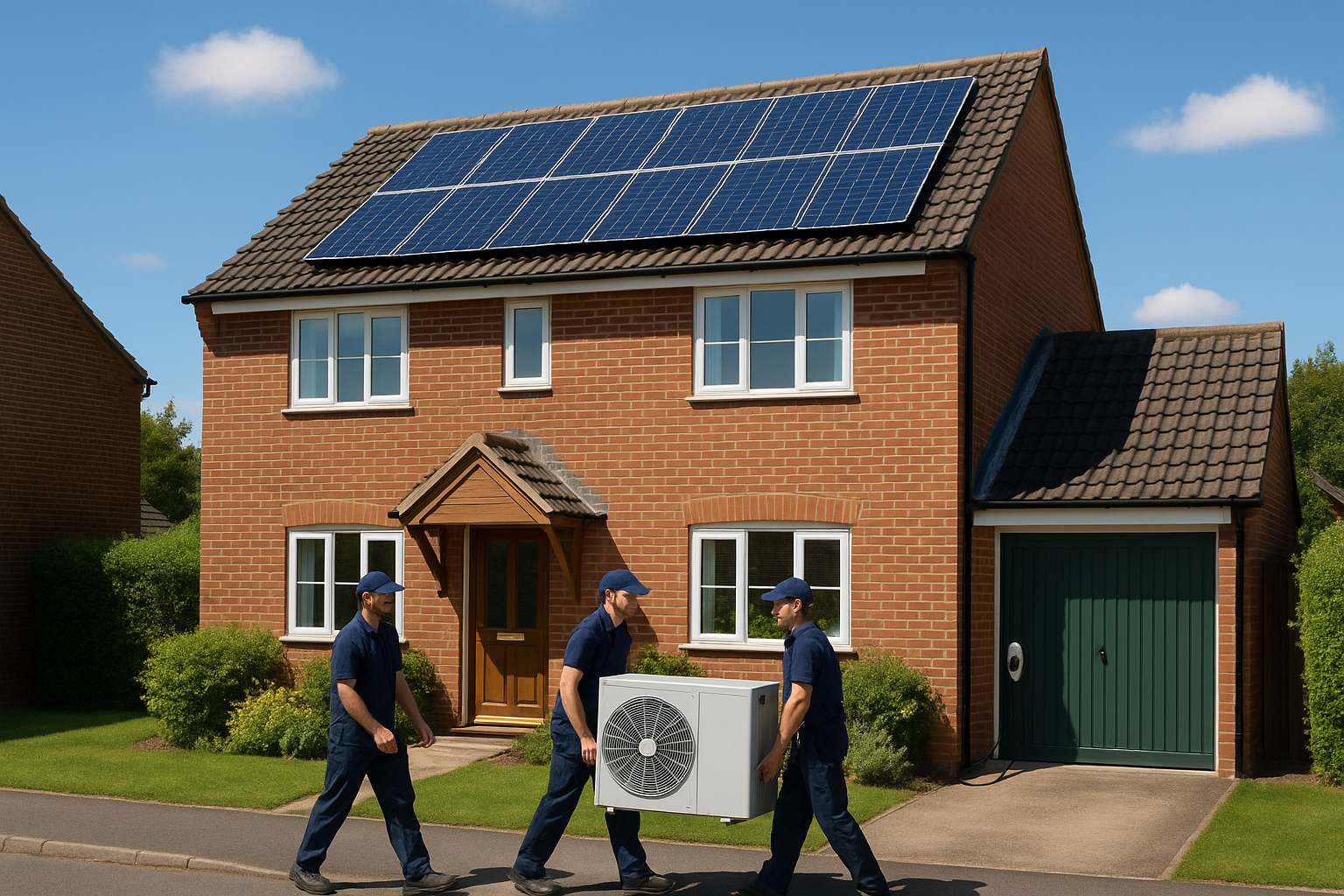
The short answer is yes — but only partially. Solar doesn’t pay for a heat pump outright, but it can significantly reduce the long-term running costs, making the overall investment more manageable.

Let’s break down how it works.

Get Help from the Government Grant

Thanks to the UK Government’s Boiler Upgrade Scheme, homeowners in England and Wales can claim up to £7,500 towards installing an air-source or ground-source heat pump.

Apply for the Boiler Upgrade Scheme here

This generous grant reduces the upfront cost substantially — but most households will still have to contribute several thousand pounds towards the total installation.

check if heat pumps are right for you

How Solar Panels Make a Difference

While the BUS grant helps you install your heat pump, solar panels help you run it more affordably.

Here’s how:

  • A heat pump runs on electricity. Solar panels let you generate some of that power for free.

  • The more solar energy you use directly, the less you buy from the grid — cutting your monthly energy bills.

  • You can store extra power in a solar battery, helping you use solar energy even when the sun isn’t shining.

  • Solar and heat pumps together can add value to your home and reduce your carbon footprint.

Remember: Solar Won’t Cover Everything

It’s important to be clear — solar helps, but it won’t cover the entire cost of running a heat pump.

That’s because:

  • Seasonal mismatch: Solar power peaks in summer, while heat pumps use the most electricity in winter.

  • Roof space: Most homes can’t fit enough panels to power 100% of their heating demand.

  • Separate incentives: The BUS grant applies to the heat pump, not to solar panels.

Still, using solar to supply even a portion of your heat pump’s electricity can make a noticeable impact on your bills.

The Combined Savings Picture

Here’s a simple breakdown of how combining solar and a heat pump adds up:

Cost Element Support / Benefit
Heat Pump Installation Up to £7,500 off via the Boiler Upgrade Scheme
Solar Panel Installation Separate investment — can reduce electricity bills
Running Costs Reduced thanks to solar generation
Long-Term Savings Lower energy bills, lower carbon footprint, potential property value boost

Example utilising solar and battery storage, leveraging on charging at cheaper rate.

The table below shows a combined savings of £792 if you utilise energy from solar and battery storage charging at cheaper rate compared with peak rate.

Scenario Assumed Coverage Annual HP kWh from Grid Effective Unit Price Annual Running Cost Saving vs Baseline
Baseline (no solar, no battery) 0% 3,000 30.0p £900
A) Battery on cheap rate 100% via battery ~0 (battery supplies) 11.1p £333 £567
B) Solar contribution 25% solar (750 kWh) 2,250 30.0p £675 £225

Example only: Assumes annual heat demand 9,000 kWh (heat), heat pump SCOP 3.0, standard tariff £0.30/kWh, off-peak £0.10/kWh, battery round-trip efficiency 90% (effective ~11.1p/kWh), and 4 kWp solar PV covering ~25% of the heat pump’s annual electricity (seasonality applies). Actual performance and savings vary with property fabric, system sizing, tariffs, usage profile, and weather. Standing charges and export payments are excluded.

Together, solar and heat pumps create a sustainable, lower-cost heating system for your home — especially when paired with proper insulation and smart controls.

How UK Green Energy Installations Can Help

At UK Green Energy Installations, we specialise in helping homeowners make the most of renewable technology. Our team can:

  • Assess your home’s suitability for solar panels and heat pumps

  • Calculate your likely energy savings

  • Design a system that fits your budget and long-term goals

In Summary

Solar panels can’t completely pay for your heat pump — but they can help power it, reduce your running costs, and increase your savings when combined with the government’s £7,500 heat pump grant.

It’s a smart, sustainable step towards lower-carbon living — and one that’s already paying off for thousands of UK homeowners.

Ready to See How Much Solar Could Power Your Heat Pump?

Find out how much solar could contribute to your heat pump’s running costs.
Our expert team can assess your home’s energy use, roof potential, and system design to show you exactly how much of your heat pump’s electricity demand could be covered by solar energy.

Contact UK Green Energy Installations

FAQs: Solar and Heat Pumps

Can solar panels power a heat pump completely?

Not usually — most homes won’t generate enough solar electricity in winter to cover all heating demand, but solar can significantly reduce grid electricity use in spring and summer. A well-sized solar array can make a noticeable difference to your overall running costs.

Does the government grant apply to solar panels?

No, the Boiler Upgrade Scheme grant only covers the cost of installing a heat pump. Solar panels are a separate investment, but they work hand-in-hand with a heat pump to reduce your ongoing electricity costs.

Will I need a battery to make the most of solar and a heat pump?

A battery isn’t essential, but it helps maximise the use of your solar power. By storing excess energy generated during the day, you can run your heat pump overnight or when the sun isn’t shining — improving your self-consumption and reducing reliance on the grid.

How much could solar reduce my heating bills?

On average, solar panels might cover 20–30% of a heat pump’s annual electricity needs, depending on your roof, home size, and usage pattern. In our example above, that could save around £200–£300 per year compared with running entirely on grid electricity.

Can I still get the heat pump grant if I already have solar panels?

Yes. Having solar panels does not affect your eligibility for the Boiler Upgrade Scheme, as long as your installation meets the grant requirements and is carried out by an MCS-certified installer.

How Solar Panels Work: Turning Sunlight into Sustainable Energy

Introduction

Solar panels are transforming how homes and businesses across the UK generate energy — offering a cleaner, greener, and more affordable way to power everyday life. But how exactly do solar panels work?

In this guide, we’ll explain the science behind solar power, step by step — and show how it connects to UKGEI’s renewable energy services.

1. What Are Solar Panels?

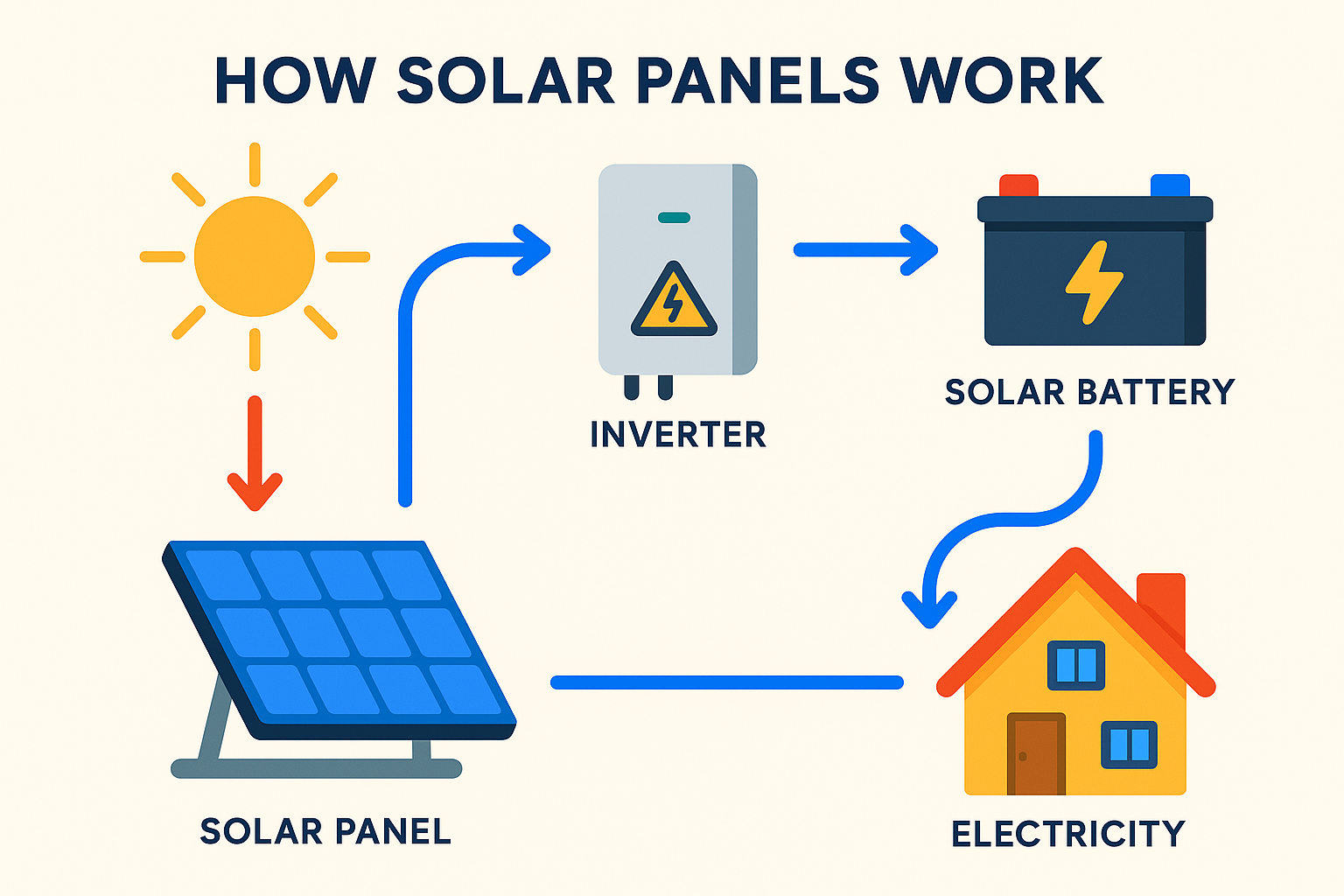
Solar panels, also known as photovoltaic (PV) panels, are devices that convert sunlight directly into electricity. Each panel is made up of multiple solar cells, typically using silicon — a semiconductor that reacts when hit by sunlight.

When sunlight hits these cells, it frees electrons inside the silicon, generating direct current (DC) electricity.

How Solar Panels Work: Turning Sunlight into Sustainable Energy

2. Converting DC to AC: The Inverter’s Role

Homes and businesses use alternating current (AC) electricity, not DC. That’s why every solar system includes an inverter, which converts the DC electricity your panels generate into usable AC power for your property.

This step makes solar energy compatible with your existing electrical systems and the national grid.

3. Storing Solar Power with Batteries

If you want to make the most of your energy — especially on cloudy days or at night — a solar battery can store the excess electricity your panels produce.

Battery storage means you rely less on the grid, reduce bills, and keep your energy clean all day long.

4. Evolving Solar Technology and Integrated Solutions

The solar industry is advancing rapidly, with new products and integrated systems emerging all the time. Many modern solar batteries now include built-in inverters or come as all-in-one hybrid units, simplifying installation and improving efficiency. There’s also a growing range of smart energy management systems that automatically optimise how and when your stored electricity is used. At UKGEI, we continuously review the latest technologies and manufacturer offerings to ensure every system we design delivers the best performance, safety, and long-term value for our customers.

5. Monitoring and Maintenance

Modern solar systems come with smart monitoring apps so you can track energy production in real time. UKGEI’s installations also include ongoing support and maintenance — ensuring your panels perform efficiently for years.

⚡ The Benefits of Solar Panels

  • Lower energy bills and potential income from exporting excess electricity

  • Reduced carbon footprint — helping meet UK net-zero goals

  • Energy independence — less reliance on the grid

  • Increased property value and appeal to eco-conscious buyers

Why Choose UKGEI?

At UKGEI, we specialise in complete solar energy solutions — from design and installation to maintenance and energy management. Our expert team works with homeowners and businesses across the UK to create efficient, cost-effective renewable systems.

👉 Learn more about our Solar Energy Services or Request a Free Quote today.

REQUEST A FREE QUOTE TODAY

Frequently Asked Questions About Solar Panels

Do solar panels work in the UK’s cloudy weather?

Yes—solar panels generate electricity from daylight, not just direct sunshine. While output is lower on overcast days, the UK still receives enough sunlight across the year for solar to be worthwhile for many homes and businesses.

How long do solar panels last?

Most modern solar panels are designed to last 25–30 years or more. Output gradually reduces over time, but quality panels paired with a professional installation will deliver reliable performance for decades.

Do solar panels need a lot of maintenance?

Maintenance is minimal. Keeping panels clean and free from debris is usually sufficient. For peace of mind, consider a maintenance plan to check performance and system health.

Can I store solar energy for use at night?

Yes. Adding a battery storage system lets you store excess daytime generation and use it later, reducing reliance on the grid and improving self-consumption.

How much money can I save with solar panels?

Savings vary by usage, system size, roof orientation, and location. Many UK households save hundreds of pounds per year, and savings can increase when combined with battery storage and smart energy management.

Will installing solar panels increase my property’s value?

Solar can make properties more attractive to buyers by lowering running costs and improving energy efficiency, which may increase perceived value.

Can solar panels work during power cuts?

Standard grid-tied systems shut down during outages for safety. If you have battery storage with a backup or islanding feature, essential circuits can remain powered during a cut.

Are there government incentives for solar energy?

Yes. The Smart Export Guarantee (SEG) pays you for eligible surplus electricity exported back to the grid. Check current supplier tariffs and eligibility criteria before you install.

How long does installation take?

Most residential systems are installed within 1–3 days, depending on roof size, access, and system complexity. Larger or more complex projects may take longer.

How do I know if my home is suitable for solar panels?

South-facing roofs with minimal shading deliver the best results, but many orientations can work. A site survey will assess roof condition, shading, and electrical setup to recommend the right system.

This Halloween, the scariest thing isn’t ghosts or goblins — it’s wasted energy.

From standby appliances to inefficient systems, “energy vampires” are silently draining your power (and your wallet).

Standby devices and inefficient appliances could be quietly sucking up to 10 % of your electricity bill.

This Halloween, keep the spooky stuff for the decorations — not your power usage.

Switch off standby. Save up to £45 a year.

With UKGEI’s solar, battery, and EV charging solutions, you can banish the bad energy — and keep your home powered by the good stuff.

CONTACT US

Make Your Energy Work Smarter: Why Battery Storage Is Worth It in the UK Today

In an era of volatile energy prices and evolving supplier offers, homeowners in the UK have more choices than ever to control their energy spend. At UKGEI, alongside suppliers like SigEnergy and myenergi, we believe that battery storage isn’t just for homes with solar panels — it’s also a smart move for any household willing to play the time-of-use game.

Here’s why battery storage is getting more attractive — and how you might benefit.

1. The context: energy tariffs are now more flexible (and clever)

The traditional “one price all day” model of electricity is shifting. Several UK suppliers are offering tariffs that reward you for using energy outside peak times or even on specific days:

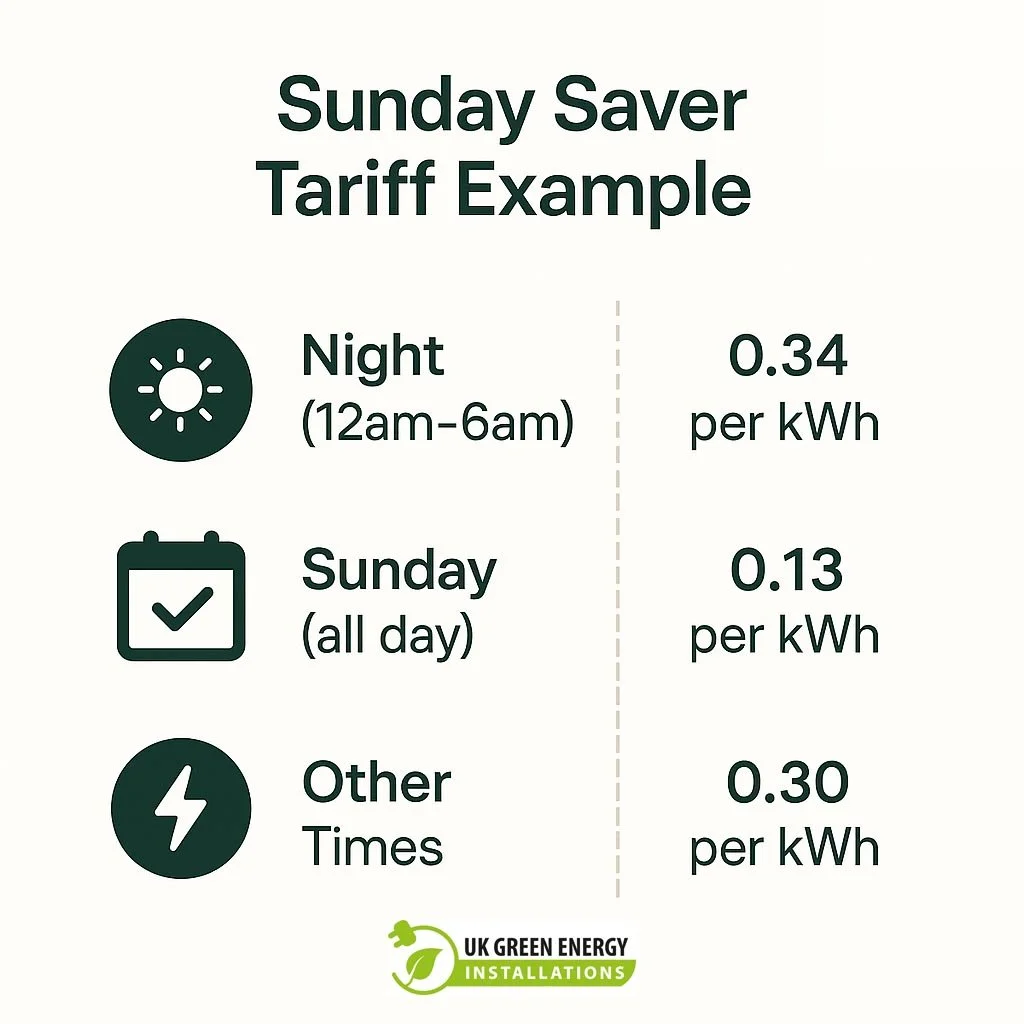
  • Some providers are offering substantially cheaper electricity on Sundays or off-peak hours. For instance, one major supplier has launched a tariff that gives you half-price electricity for eight hours every Sunday.

  • More generally, “time-of-use” tariffs (where unit rates vary by time of day) are gaining traction. According to an advice guide, electricity is cheapest in the UK between about midnight and 6 am — but you’ll only benefit if you’re on a tariff that allows off-peak pricing.

  • A recent summary shows that major providers are now offering off-peak or discounted electricity sessions if you shift usage or have a smart meter.

What this means: the more you can shift when you consume energy — or even better, the more you can store cheap energy and then use it when rates are high — the more you can save.

2. Why a battery storage system makes sense, even without solar

Often the pitch for battery storage is “use your solar panels + battery to maximise self-consumption”, but there’s a compelling case even if you don’t have solar:

  • A battery lets you charge during cheaper electricity periods, store that energy, and then discharge/use it during more expensive times (or when the grid rate is higher). This kind of arbitrage becomes increasingly viable when suppliers offer sharply discounted or off-peak rates.

  • With a battery in place, you’re not entirely stuck on the time your supplier dictates — you can optimise for your cheapest rate window.

  • Systems like those from SigEnergy (e.g., the SigenStor) are built to be modular, intelligent, and ready for such use-cases. For example, the SigenStor is described as a “5-in-1” energy storage system (battery + inverter + management system) designed for UK homes.

  • From a longer-term viewpoint: energy prices remain subject to wholesale volatility, network charges and peak demand. Installing a battery is a way of locking in more control rather than simply being at the mercy of rising rates.

3. How to think of the numbers

Here’s a simplified example to illustrate:

  • Suppose you’re on a tariff where electricity costs you a lower rate overnight or on Sundays (because you shift usage).

  • You install a home battery that can store, say, 10 kWh overnight when the unit rate is X p/kWh low, and then during the evening peak you consume from the battery rather than from the grid at Y p/kWh high.

If Y – X is large enough (and you have enough cycles/use) then the savings over a year can add up.
Of course you must factor in: cost of battery system + installation; efficiency losses; correct usage habits; supplier’s eligibility (smart meter, tariff, etc).

What’s important: With the right system and usage pattern, battery storage can shift you from being just a passive user of grid electricity to an active optimiser of your home energy.

4. Spotlight on some deals you should know about

  • British Gas offers a scheme called “PeakSave Sundays” where customers (with the right meter) can get half-price electricity between 11 am-4 pm every Sunday.

  • Several suppliers are running “free or heavily discounted electricity” initiatives if you shift your usage or participate in off-peak windows. For example, one article noted that EDF, OVO, British Gas and others are offering limited-time free electricity/credits for off-peak use.

  • On time-of-use generally: If you are on a tariff that allows off-peak use, then using appliances or charging a battery at those times can produce meaningful savings.

Tip for readers: Check your current tariff (unit rates by time), check whether you have a smart meter, ask your supplier whether there’s a “time-of-use” or discounted window you could utilise.

5. Why choosing the right battery matters (and how UKGEI helps)

At UKGEI, we’ve worked with brands like SigEnergy to install smart, future-proof battery storage systems. A few things we emphasise:

  • Choose a system that supports time-of-use optimisation: the software/EMS matters, not just the battery pack. As described in reviews, SigEnergy’s system is modular, smart and built for UK homes.

  • Factor in your usage pattern: A battery is most useful if you have a predictable peak period (e.g., evenings) and can charge during a low-rate window.

  • Consider scalability and future needs: Even if you don’t have solar today, choose a system that allows expansion or integration (e.g., EV charging) down the line.

  • Professional installation & monitoring matter: To maximise ROI, the system must be optimally configured and maintained.

6. Putting it all together: A sample “path to savings”

  1. Review your current electricity tariff. Are you paying standard rates all day? Does your supplier offer a time-of-use or off-peak window?

  2. Identify the cheapest window (this could be overnight, Sundays, etc). Make note of the unit rate if possible.

  3. Compare that with your peak usage window (evenings, weekdays).

  4. If the differential is large-ish, consider installing a battery system that allows you to store during the cheap window and discharge during the expensive window.

  5. Monitor real world usage: how many kilowatt-hours are you shifting? What’s the battery efficiency & capacity?

  6. Over time, you should reduce your grid-purchased electricity during the most expensive periods and thus reduce your bill (or at least reduce the portion of expensive consumption).

  7. Bonus: You’re also increasing resilience (you might have backup), and preparing for future tariffs (e.g., more time-of-use, more peak/off-peak differentiation) which favour flexible storage.

7. Final thoughts & call to action

The UK energy market is evolving — static tariffs are giving way to variable, time-sensitive pricing. That shift opens an opportunity: by using battery storage intelligently, you can play to the cheaper electricity windows rather than simply paying whatever the grid sets.

If you’re a homeowner interested in reducing your energy bills, increasing flexibility and being ready for the future, now is a very good time to consider battery storage. At UKGEI we can help you select the right system (for example from SigEnergy or myenergi), design the installation for your home, and integrate it with your tariff/time-of-use strategy.

Ready to explore your options? Contact us for a free assessment — let’s map your current usage, tariff, and show how a storage system could pay back over the coming years.

contact us for a free assessment

Seasonal Solar Maintenance Tips for Autumn

Homeowners can support solar performance during autumn with a few practical, safety-conscious checks:

1. Carry Out a Ground-Level Visual Inspection

A periodic visual check from ground level — or from an accessible upstairs window — can help you spot leaf build-up, bird activity or shading from new growth on nearby trees. There is no need to climb onto the roof, and professional assistance should be sought for any cleaning or physical maintenance.

Seasonal Solar Maintenance Tips for Autumn

2. Monitor Output Through Your Inverter or App

Modern PV systems provide real-time or historic generation information. If output appears unexpectedly low for the season and weather conditions, debris or shading could be a contributing factor.

3. Keep Gutters Clear

Leaves that slide off solar panels often collect in gutters, increasing the risk of blockages. Clear guttering helps ensure proper drainage and reduces roof-moisture issues throughout autumn and winter.

4. Consider a Professional Clean if Needed

Although panels are designed to be largely self-cleaning, areas with heavy tree coverage or ongoing leaf fall may benefit from an occasional professional clean. This should only be carried out by trained installers using the correct equipment to avoid damage or personal safety risks.

Safety First: Avoid DIY Roof Work

It is important to note that no maintenance task is worth compromising safety. Climbing onto a roof presents significant risk, particularly during wet or windy autumn conditions. Always engage a qualified professional if leaves or debris need to be removed from hard-to-reach areas or from beneath a solar array.

Looking Ahead to Winter

Taking simple steps in autumn can help ensure your solar panels are prepared for the harsher winter months. By reducing leaf build-up and monitoring system performance, homeowners can support steady generation throughout the darker season and maximise the long-term return on their investment.

Supporting Long-Term Solar Performance

Solar panels are a low-maintenance, long-life technology, and seasonal awareness can help protect their output for years to come.

If you’re considering a solar installation for your home, the UKGEI team can offer guidance on system design and installation tailored to your property and energy goals.

CHAT TO US ABOUT TAILORING YOUR SOLAR INSTALL
Download a checklist