
With electric vehicle ownership continuing to rise across the UK, choosing the right home EV charger has never been more important. In 2026, EV chargers are no longer just about plugging in — they’re about smart charging, solar integration, load management and future-proofing.
So which EV chargers are actually worth considering for UK homes this year?
Here’s a clear, practical guide to the best EV chargers for UK homes in 2026, and how to choose the right one for your setup.
What to Look for in a Home EV Charger in 2026
Before comparing brands, it’s worth understanding what really matters now:
Smart charging (app control, scheduling, monitoring)
Solar integration (use excess solar instead of grid power)
Load balancing (protects your main fuse)
Compatibility with time-of-use tariffs
Build quality & support
Future-proof features (OCPP, updates, scalability)
The “best” charger depends on your home, your EV and whether you have (or plan to install) solar and battery storage.
1. Zappi — Best for Solar Homes
Best for: Homes with solar panels installed
Why it stands out: Solar optimisation
Zappi remains one of the most popular EV chargers in the UK — and for good reason.
Key benefits:
Designed specifically for solar integration
Diverts surplus solar energy into your EV
Multiple charging modes (eco, eco+, fast)
Works well with smart tariffs
If your goal is maximising solar self-consumption, Zappi is still one of the strongest options in 2026.
2. Andersen — Best for Design-Focused Homes
Best for: Homeowners who care about aesthetics
Why it stands out: Premium design + hidden cable
Andersen chargers combine smart charging with a strong design focus.
Key benefits:
Cable neatly hidden inside the unit
Custom finishes to match your property
Smart app control and scheduling
Suitable for modern and traditional homes
If you want a charger that looks good on the front of your house without compromising on functionality, Andersen is a popular choice.
3. Tesla Wall Connector — Best for Tesla Owners
Best for: Tesla drivers
Why it stands out: Seamless Tesla integration
The Tesla Wall Connector is designed specifically for Tesla vehicles.
Key benefits:
Direct compatibility with Tesla cars
Fast, reliable charging
Clean, minimal design
Ideal for Tesla-only households
While it lacks some solar-specific features, it’s a solid option if you’re fully in the Tesla ecosystem.
4. Pod Point — Best Simple Smart Charger
Best for: Straightforward home charging
Why it stands out: Simplicity and reliability
Pod Point is widely used across the UK and offers a no-nonsense approach.
Key benefits:
Simple app scheduling
Reliable performance
Good support network
Popular for standard overnight charging
It’s a good option if you want a trusted brand without advanced energy management features.
5. Rolec — Best Budget-Friendly Option
Best for: Cost-conscious installs
Why it stands out: Value for money
Rolec chargers offer a more affordable entry point.
Key benefits:
Lower upfront cost
Basic smart features available
Suitable for simple installs
While not as advanced as some premium models, Rolec chargers can still be a practical choice depending on requirements.
Which EV Charger Is Right for You?
The right charger depends on:
Your EV model
Whether you have solar panels
Your electricity tariff
Your property’s electrical capacity
Whether aesthetics matter to you
Future plans (battery storage, second EV)
For example:
Solar home → Zappi
Design-led home → Andersen
Tesla owner → Tesla Wall Connector
Simple overnight charging → Pod Point
Budget-led install → Rolec
Smart EV Chargers and Solar Integration
In 2026, more homeowners are combining EV chargers with:
Solar PV
Battery storage
Hybrid inverters
Smart tariffs
When integrated correctly, a smart EV charger can:
Charge using excess solar
Avoid peak electricity rates
Reduce grid reliance
Improve overall energy savings
This is why charger selection should be part of a whole-home energy design, not a standalone decision.
Installation Matters More Than the Charger
Even the best EV charger won’t perform well if it’s poorly installed.
A professional installation should include:
Load assessment
PEN fault protection
Correct cable routing
Safe earthing
Smart configuration and testing
Choosing an experienced installer ensures your charger is safe, compliant and future-proof.
Final Thoughts
There’s no single “best” EV charger for every home — but there is a best charger for your home.
In 2026, the smartest approach is to:
Choose a charger that fits your energy setup
Plan for solar and battery integration
Install with future expansion in mind
If you’re considering installing a home EV charger in Surrey, Hampshire or Berkshire, a tailored assessment will help ensure you choose the right charger and configuration from day one.
Frequently Asked Questions
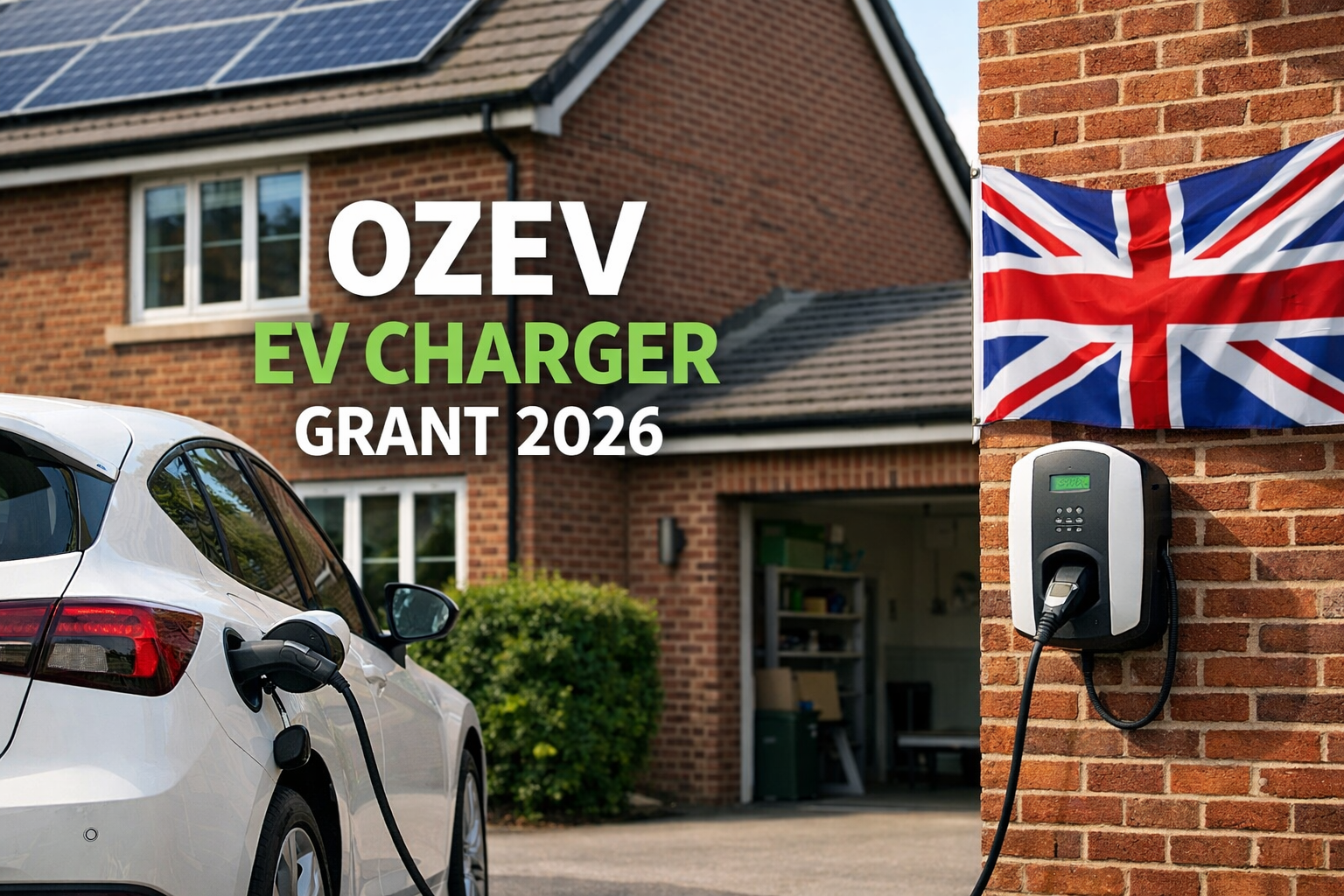
Is the OZEV EV charger grant available for homeowners in 2026?
In 2026, OZEV support is generally more targeted than it used to be. Most homeowners in single-occupancy houses with a private driveway won’t qualify, but you may be eligible if you live in a flat, rental property, or have shared parking.
Who can still qualify for the OZEV grant?
Eligibility typically applies to situations such as rented properties, flats/apartments, buildings with shared parking, and landlord-supported installations. The exact criteria depend on the specific OZEV scheme being used.
How much is the OZEV EV charger grant in 2026?
Grant values can change and are usually capped to a fixed amount per chargepoint rather than covering the full cost. The best approach is to confirm the current value and eligibility before installation begins.
How do I apply for an OZEV EV charger grant?
In most cases, your installer handles the grant claim. Eligibility is confirmed first, the installation is designed to meet scheme requirements, and the grant amount is then deducted from your invoice where applicable.
What if I don’t qualify for the OZEV grant?
You can still reduce EV charging costs with smart charging, off-peak tariffs and solar integration. Many households find that long-term savings from tariff optimisation and solar charging outweigh a one-off grant.
Is it still worth installing an EV charger without a grant?
For most EV owners, yes. Home charging is typically cheaper and more convenient than public charging. A smart EV charger can also help you charge at the lowest-cost times and better control energy use.