
Saturday 24 October 2026 marks the end of British Summer Time, with the clocks going back one hour at 2am on Sunday 25 October. But what does this mean for your solar panels, inverter and home battery storage system?
If you have solar panels and battery storage, particularly if you use cheaper overnight electricity to charge your battery, you might be wondering whether you need to change any settings.
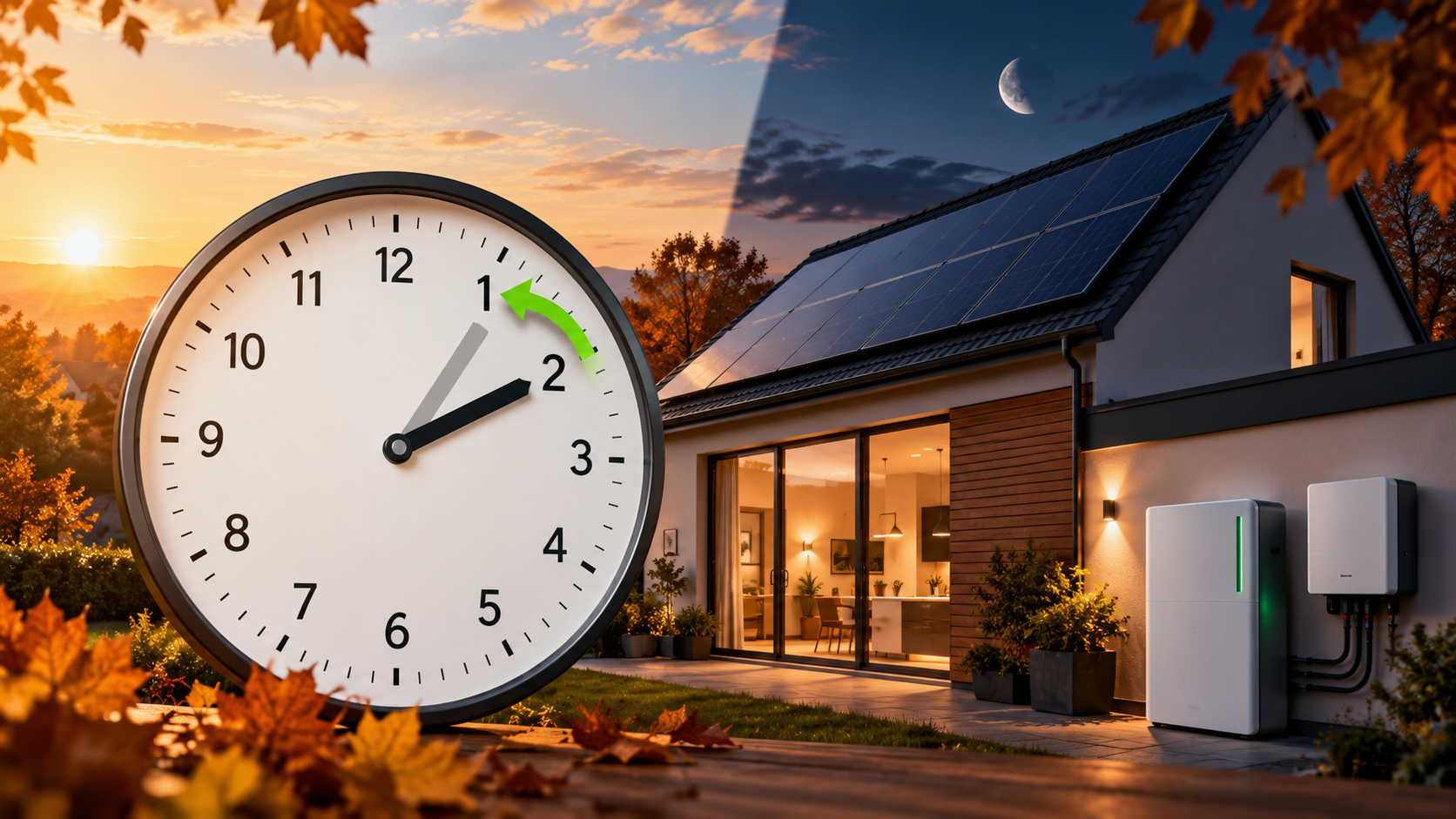
The good news is that many modern internet-connected solar inverters automatically synchronise their time, meaning you shouldn't normally need to adjust the clock manually.
However, this depends on your inverter manufacturer, its settings and internet connectivity.
Will the Clock Change Affect My Battery Charging Schedule?
If your home battery is programmed to charge overnight using a cheaper electricity tariff, it's worth checking that your charging schedule remains aligned with your tariff after the clocks change.
Some systems automatically account for the change from British Summer Time (BST) to Greenwich Mean Time (GMT), while others may require adjustments.
An incorrect time setting could mean your battery charges outside your cheaper electricity period, potentially increasing your electricity costs.
What Should You Check?
On Sunday morning, take a moment to:
Check your inverter's time: Make sure it displays the correct UK time.
Review battery charging schedules: Confirm that your overnight charging times still match your electricity tariff.
Check your monitoring app: Make sure your solar and battery system is communicating normally.
If everything is displaying correctly and operating as expected, there's usually nothing further you need to do.
Frequently Asked Questions
Do solar inverters automatically change when the clocks go back?
Many modern internet-connected inverters synchronise their time automatically, provided the time zone and daylight saving settings are correctly configured. However, this varies between manufacturers and models.
Will my solar panels still work when the clocks change?
Yes. Your solar panels will continue generating electricity whenever sufficient sunlight is available. The clock change does not affect their ability to generate electricity.
Will my home battery still charge overnight?
Yes, provided your battery is configured for overnight charging. However, it's worth checking that the scheduled charging period still corresponds with your cheaper electricity tariff.
Do I need to change the time on my Sigenergy, Tesla or GivEnergy system?
Many modern systems offer automatic time synchronisation, but behaviour can depend on the model, firmware and configuration. Check your monitoring app and follow the manufacturer's guidance if the displayed time is incorrect.
What happens if my inverter isn't connected to the internet?
Some inverters can maintain the correct time using their internal clock and configured daylight saving rules. Others may require manual adjustment. Consult your manufacturer's instructions if you're unsure.
Could the clock change increase my electricity bill?
Potentially. If your battery charging schedule shifts outside your off-peak electricity tariff, you could end up paying more to charge your battery. Checking your schedule after the change can help avoid unnecessary costs.
Need Advice About Your Solar or Battery Storage System?
At UK Green Energy Installations, we install solar panels and battery storage systems across Hampshire, Surrey and Berkshire.
Whether you're considering battery storage for the first time or want to understand how intelligent energy management can help reduce your electricity bills, our team can help.
Contact UK Green Energy Installations →