
Smart homes are evolving. What began with voice-controlled lighting, smart thermostats and connected security systems is becoming something far more sophisticated: homes that can intelligently coordinate how electricity is generated, stored and consumed.
One of the most important smart home trends for 2026 is the growing role of artificial intelligence (AI), predictive automation and home energy management systems (HEMS).
For UK homeowners, this development is particularly relevant. With electricity costs remaining a concern, technologies such as solar panels, battery storage, smart EV chargers and heat pumps can increasingly work together to make better use of available energy.
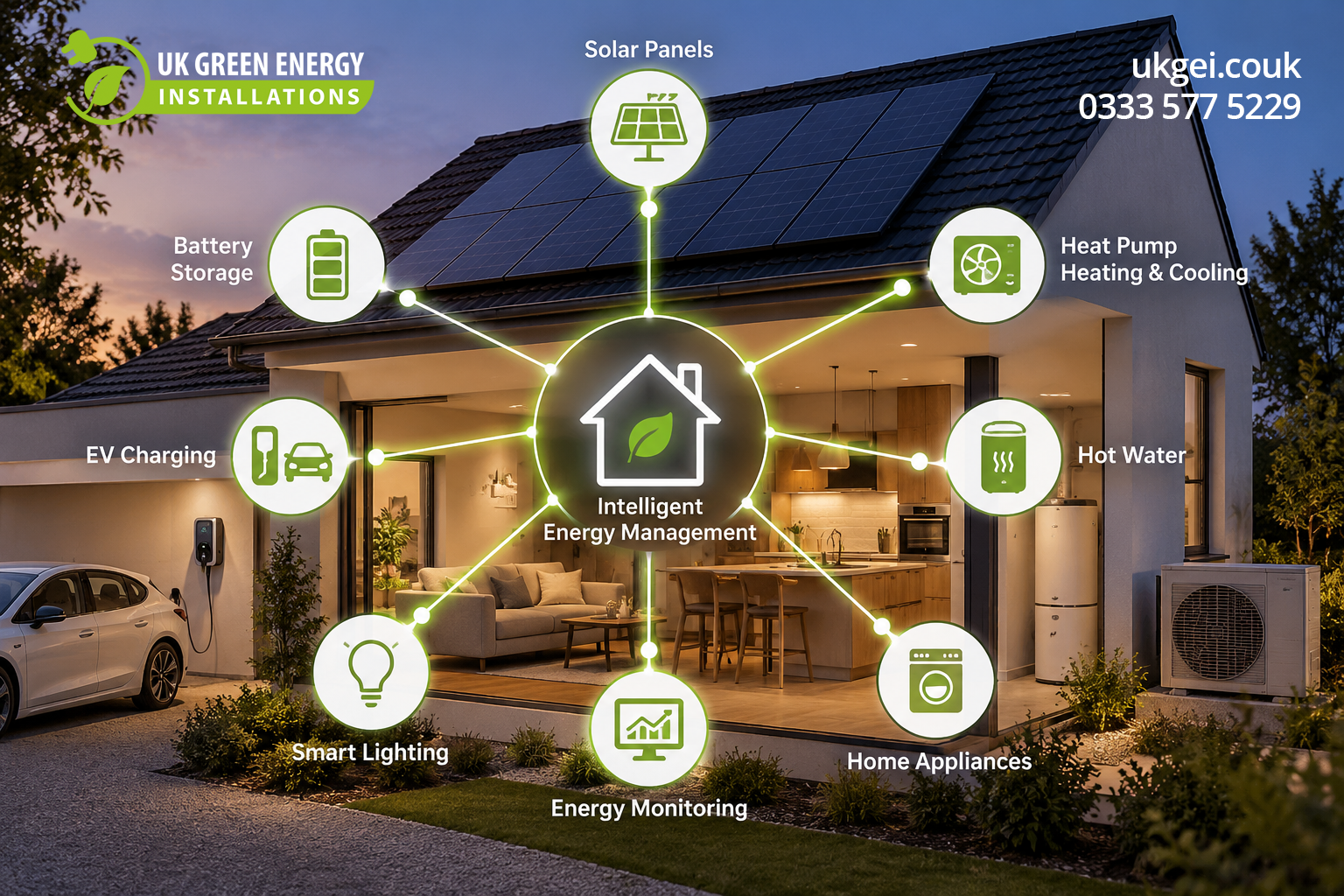
But what does an intelligent smart home actually look like, and how can these technologies help reduce reliance on the electricity grid?
What Is a Smart Home Energy Management System (HEMS)?
A Home Energy Management System (HEMS) is technology that monitors, controls and optimises how electricity is used within a property.
Rather than treating solar panels, battery storage, EV chargers and household appliances as entirely separate systems, a HEMS can coordinate compatible equipment to improve energy efficiency.
Depending on the system, it may consider:
How much electricity your solar panels are generating.
How much energy is available in your home battery.
Current household electricity consumption.
Electricity tariffs and cheaper off-peak charging periods.
Weather forecasts and predicted solar generation.
When an electric vehicle or other connected equipment needs electricity.
The objective is straightforward: use electricity more intelligently, reduce unnecessary grid imports and maximise the value of the energy your home generates or stores.
How Does AI Manage Energy in a Smart Home?
Traditional smart home automation typically follows instructions. For example, a homeowner might schedule their heating to turn on at 7 am or programme their battery to charge overnight.
More advanced systems can go further by using forecasts, energy consumption information and tariff data to optimise decisions automatically.
For example, an intelligent energy management system might anticipate reduced solar generation during cloudy weather and adjust its battery charging strategy accordingly.
Some systems incorporate AI or machine learning, while others use sophisticated rule-based automation and forecasting. The precise capabilities depend on the manufacturer and installed equipment.
For homeowners, the important development is the move from manually controlling individual devices towards more coordinated, automated home energy management.
Want to see how everything works together?
Discover how a complete Sigenergy home energy system works, from solar panels and battery storage to EV charging.
Read UKGEI's guide →
How Do Solar Panels and Battery Storage Work Together in a Smart Home?
Solar panels generate electricity during daylight hours, but household demand doesn't always coincide with peak generation.
Without battery storage, surplus solar electricity may be exported to the grid.
By combining solar panels with home battery storage, homeowners can store some of that surplus electricity for use later in the day or evening.
An intelligent energy management system can help determine when to store electricity, use it within the home or export it, depending on system capabilities, battery settings and electricity tariffs.
This can improve solar self-consumption and reduce the amount of electricity purchased from the grid.
Can a Home Battery Charge Using Cheap Overnight Electricity?
Yes. Many modern home battery systems can charge using cheaper off-peak electricity, depending on the battery's functionality and the household's tariff.
Stored electricity can then be used during more expensive periods.
Importantly, you don't necessarily need solar panels to benefit from battery storage. A standalone battery system may be suitable for households wanting to take advantage of time-of-use electricity tariffs, even where rooftop solar isn't practical.
Can Solar Panels Power an Electric Car, Hot Water and Heat Pump?
One of the most exciting developments in smart home energy management is the ability to coordinate several major household energy demands.
A suitably designed system can potentially use solar-generated electricity to:
Charge a home battery for use later.
Charge an electric vehicle using compatible smart EV charging equipment.
Heat domestic hot water through an appropriate solar diversion or heating control system.
Support a heat pump, reducing the amount of grid electricity required when solar generation is available.
Power everyday appliances, including lighting, cooking equipment and household electronics.
Not every device can be controlled by every energy management platform. Compatibility, electrical capacity and the appropriate control equipment must be considered during system design.
Nevertheless, integrating these technologies can help homeowners make much more effective use of the electricity they generate.
AI Home Energy Management in Action: The mySigen App
Sigenergy's mySigen App demonstrates how AI can help homeowners manage their electricity more intelligently. Using solar generation forecasts, household consumption patterns and electricity tariffs, its SigenAgent technology can help optimise when electricity is stored, used or exported.
Homeowners can also monitor energy flows in real time and explore how their system is making energy management decisions.
Explore the mySigen App and its AI features →Why Are Unified Smart Home Systems Becoming More Important?
Another significant smart home trend for 2026 is interoperability: the ability for devices from different manufacturers to communicate and work together.
Standards such as Matter are helping improve compatibility across supported smart home devices, including lighting, sensors and certain heating controls.
However, home energy equipment introduces additional considerations. Solar inverters, battery systems, EV chargers and heat pumps may use manufacturer-specific software, communication protocols or dedicated energy management platforms.
This makes system compatibility and professional design particularly important.
Homeowners planning a smart energy system should consider not only what they want to install today, but also what they might add in the future.
Is Smart Home Energy Management Worth It in the UK?
The potential benefits depend on the property's electricity consumption, installed technologies, tariff arrangements and the way the system is configured.
However, a well-designed smart energy system may help homeowners:
Reduce electricity purchased at peak-rate prices.
Increase the amount of self-generated solar electricity used at home.
Make better use of cheaper off-peak tariffs.
Coordinate EV charging and other high-energy demands.
Monitor energy consumption more effectively.
Prepare for future technologies, including additional battery capacity or electrified heating.
For some households, solar panels and battery storage may be the starting point. Others may begin with battery storage alone and expand their system over time.
The key is choosing equipment that works together and meets the household's current and future energy requirements.
Planning a Smart Energy Home in Hampshire, Surrey or Berkshire?
At UK Green Energy Installations (UKGEI), we design and install solar panels, battery storage and EV charging solutions for homeowners across Hampshire, Surrey and Berkshire.
As an MCS-certified, NICEIC-approved installer, we can assess your property's energy requirements and recommend a system designed around your electricity consumption, budget and future plans.
Whether you're considering your first solar installation, adding battery storage or exploring a more integrated smart energy system, we can help you understand the available options.
Frequently Asked Questions About Smart Home Energy Management
What is a home energy management system?
A home energy management system (HEMS) monitors and coordinates electricity consumption, generation and storage. Depending on the technology, it can manage compatible solar panels, battery storage, EV chargers and other connected equipment to help reduce energy costs and improve efficiency.
How does AI improve home energy efficiency?
AI-enabled energy management systems can use information such as electricity consumption patterns, weather forecasts, solar generation predictions and tariff prices to optimise when electricity is stored or consumed. Not all smart energy systems use AI, and functionality varies between manufacturers.
Can I use battery storage without solar panels?
Yes. Many home battery systems can charge using electricity from the grid, including during cheaper off-peak tariff periods. The stored electricity can then be used later, potentially reducing electricity costs depending on the tariff, battery efficiency and household consumption.
Can solar panels power an EV charger, hot water and heat pump?
Yes. Solar-generated electricity can help supply all three, provided suitable equipment and controls are installed. Smart EV chargers, solar hot water diversion systems and compatible heat pump controls can help coordinate energy consumption, although functionality depends on the system configuration.
Can Sigenergy manage solar panels, battery storage and EV charging together?
Sigenergy offers integrated solar, battery storage and compatible EV charging technologies supported by its energy management platform. Available functions depend on the specific products, system configuration and software capabilities. A professional assessment can establish which features are suitable for a particular property.