
Solar panels are becoming an increasingly familiar sight on new-build homes across the UK, and changes to building standards mean they are set to become even more common.
For new homeowners, that's great news. Generating electricity from your own roof can help reduce the amount of electricity you need to purchase from the grid.
But moving into a property that already has solar panels can also raise plenty of questions.
How big is the solar system? How much should it generate? Can you add a battery? Can you add more panels? And can you use the solar energy to charge an electric car?
Here's what new-build homeowners should know.
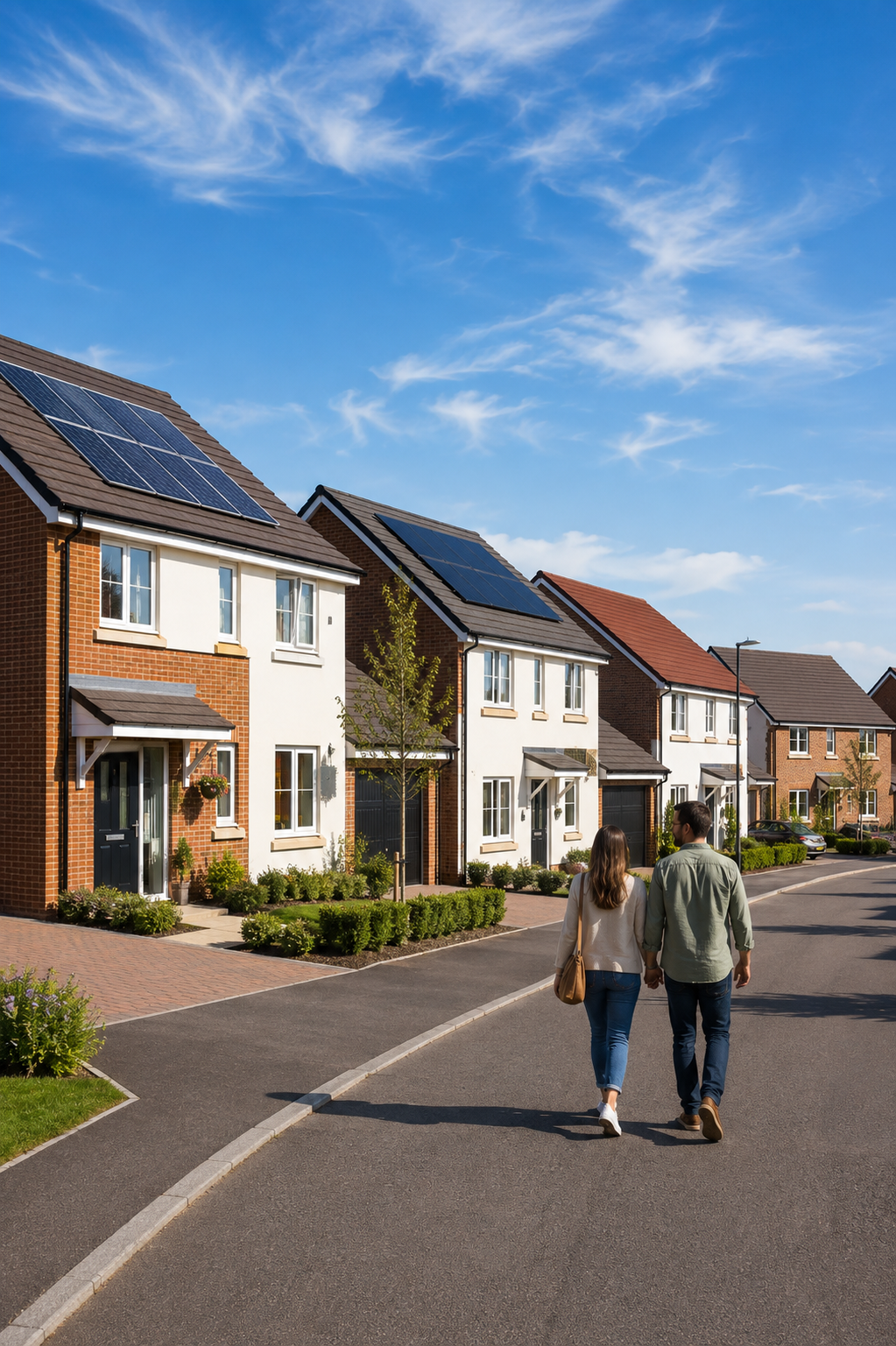
Why Are More New-Build Homes Getting Solar Panels?
The way new homes are built in England is changing.
The new Future Homes and Buildings Standards introduce tougher requirements for energy efficiency, low-carbon heating and on-site renewable electricity generation.
The changes are designed to ensure new homes are more energy efficient and better prepared for a lower-carbon electricity system.
For homeowners, one of the most noticeable changes will be the increasing number of new properties fitted with solar PV from the outset.
Your New Home Has Solar Panels – But What Have You Actually Got?
One of the first things we'd recommend is finding out exactly what has been installed.
Two houses can both have solar panels on the roof but have very different systems.
Useful information to find includes:
The number and model of solar panels
The total installed capacity of the system
The make and model of the inverter
Which direction the panels face
Whether there are panels on more than one roof elevation
Whether the system has online monitoring
Whether a battery can be easily added
Installation and commissioning documentation
If you're unsure, a solar installer can assess the existing system and explain what you have.
Is the Developer-Installed Solar System Big Enough?
This is an important question.
A solar PV system installed as part of a housing development has been designed to meet the requirements of that particular property and development.
That doesn't necessarily mean it has been designed around your individual electricity consumption.
Your household may use considerably more electricity because you:
Work from home
Own an electric vehicle
Use electric heating or a heat pump
Have air conditioning
Have a large family
Use more electricity during the day
Plan to electrify more of your home in the future
Depending on the property and existing equipment, there may be an opportunity to increase the amount of solar generation available.
Can You Add More Solar Panels to a New-Build Home?
Potentially, yes.
Whether additional solar panels can be installed depends on several factors, including available roof space, orientation, shading, the existing inverter and the electrical design of the original system.
It isn't always as simple as attaching another couple of panels to what's already there.
The existing installation needs to be assessed first so that any expansion is technically suitable and works correctly with the equipment already installed.
In some situations, an additional or redesigned solar system may be more appropriate.
Can You Add Battery Storage to New-Build Solar Panels?
This is likely to be one of the biggest opportunities for new-build homeowners.
Solar panels generate electricity when daylight is available, but that doesn't necessarily coincide with when your household uses the most electricity.
If your solar panels are generating more electricity than your home needs at that moment, the excess can be exported to the grid.
A compatible home battery can instead store some of that excess solar electricity for use later.
For example:
During the day:
Your solar panels generate electricity and power the home.
Excess generation:
Available solar energy can charge the battery.
During the evening:
Stored energy can be used when solar generation has reduced or stopped.
This can increase the amount of your own solar-generated electricity that you use within the property.
What If My New Home Doesn't Have Solar Panels?
Not every new-build property currently comes with solar PV.
If you've purchased a newer home without solar panels, it may still be an excellent candidate for a solar installation.
Modern properties are often designed to high energy-efficiency standards, and adding solar PV can further reduce the amount of electricity that needs to be purchased from the grid.
A professional assessment can determine the available roof space, orientation and appropriate system size for your household.
Can I Charge an Electric Car Using My Solar Panels?
Yes.
If you have an EV charger and solar panels, electricity generated by the solar PV system can contribute towards charging your vehicle.
With compatible equipment, an EV charger can monitor the electricity being generated by your solar panels and adjust charging accordingly.
The exact amount of solar energy available for your vehicle will depend on factors including:
The size of your solar PV system
Current weather and solar generation
Household electricity consumption
When the vehicle is at home
The EV charger's capabilities
For households with solar, battery storage and an EV, it makes sense to consider all three technologies as parts of the same home energy system.
Don't Forget About Your Electricity Tariff
Solar panels aren't the only consideration.
Modern time-of-use electricity tariffs can offer different electricity prices at different times of day.
Depending on your equipment and tariff, a home battery may be able to charge using cheaper off-peak electricity and make that stored energy available later.
Combine that with solar generation and smart EV charging and there are several ways to manage when your home takes electricity from the grid.
The right setup will depend on your household, tariff and energy consumption.
Moving Into a New Home? Check Your Solar Monitoring
If your new property already has solar panels, make sure you have access to any monitoring system associated with them.
Monitoring can allow you to see information such as:
Current solar generation
Daily and historical generation
Household consumption on compatible systems
Battery charge level if one is installed
Electricity being imported from or exported to the grid
If the previous owner or developer hasn't provided access, find out which inverter or monitoring platform the installation uses.
Having access to this information makes it much easier to understand how your system is performing.
Think About Your Future Energy Requirements
One of the biggest changes we're seeing is that household technologies are increasingly connected.
A homeowner may start with solar panels but subsequently add:
Solar PV → Battery Storage → EV Charging → Heat Pump → Smart Energy Tariff
That's why it's worth thinking beyond your electricity consumption today.
If you're considering buying an EV in the next couple of years, for example, tell your solar installer.
Likewise, if you're considering a heat pump, air conditioning or another significant electrical load, it may affect how your future energy requirements are assessed.
Solar Panels Are Becoming Part of the New-Build Home
The move towards solar on new homes represents a significant change in how we think about household electricity.
Rather than solar PV being something homeowners necessarily add years after buying their property, more people will move into homes that generate electricity from the day they move in.
But the system installed when the house is built doesn't have to be the end of the story.
Depending on your property and existing installation, you may be able to add battery storage, increase solar generation, install smart EV charging or develop a more integrated home energy system as your requirements change.
Need Help With Solar on Your New-Build Home?
If you've moved into a new-build or recently built property with solar panels and aren't sure what you've got, UK Green Energy Installations can help.
With more than 30 years of electrical industry experience, UKGEI provides professionally designed solar PV, battery storage and EV charging solutions for homeowners across Surrey, Hampshire and the surrounding areas.
Whether you want to add battery storage to existing solar panels, expand your solar installation or integrate an EV charger, we can assess the existing system and discuss the options available for your home.