
Electricity unit rates are rising in January, and VAT on qualifying home solar and battery installations is due to rise in April. What could those two changes mean for the cost of installing eight solar panels and a battery, and for the amount you pay your electricity supplier?
Rates checked 27 November 2026. The figures below use one illustrative home and installation.
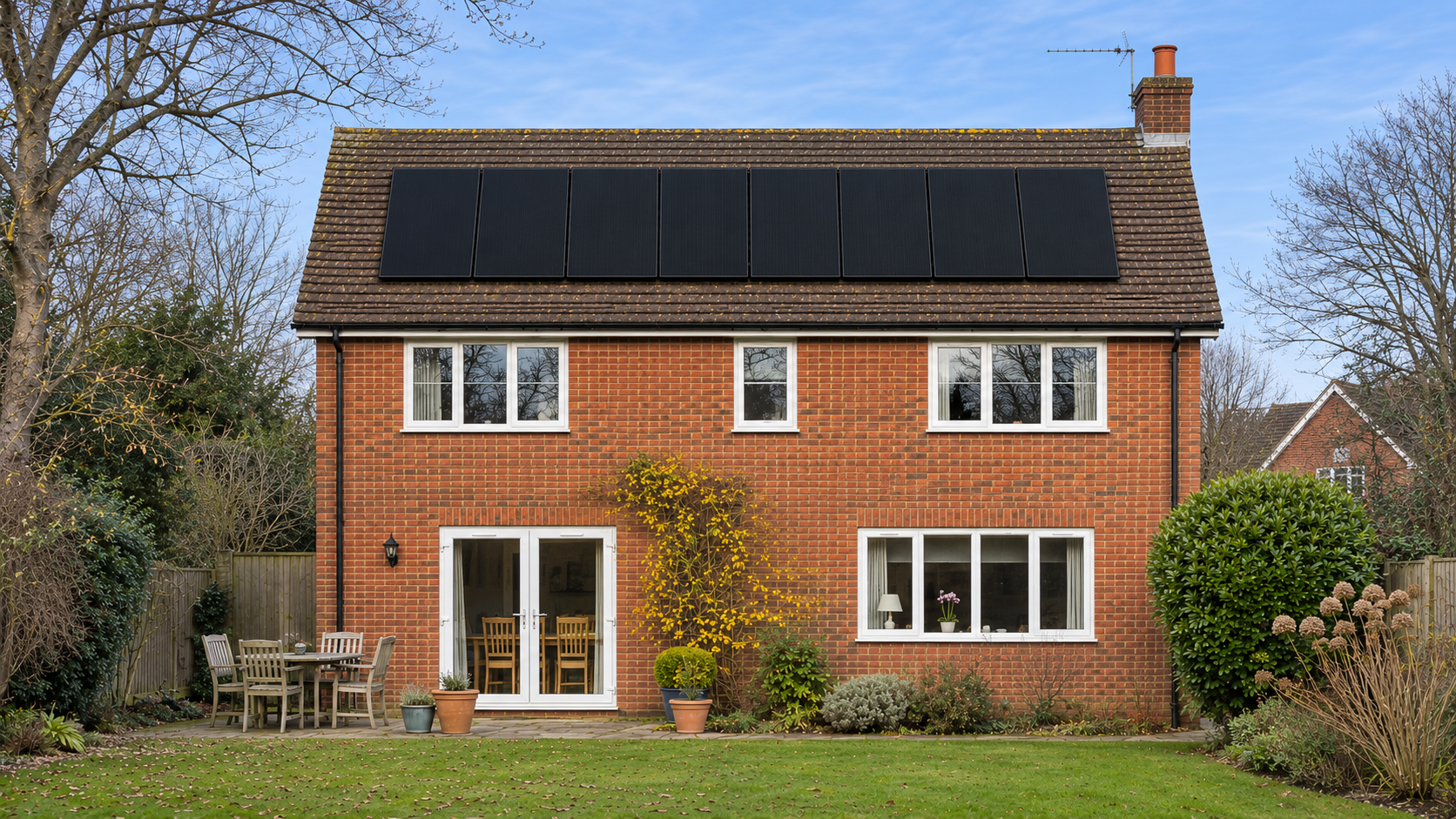
What could eight solar panels and a battery cost?
Illustrative prices only. Every installation is different. Your quote will depend on the roof layout, access and scaffolding, equipment choice and any electrical work needed.
Take eight 450 W panels with a combined rated output of 3.6 kWp, a 9.04 kWh Sigenergy SigenStor battery, a 6 kW Sigenergy hybrid inverter and a Sigenergy HomePro Gateway for backup. If that system costs £12,500 installed before VAT, here’s how the VAT change affects the total.
£625 more for the same installation if the pre-VAT price stays at £12,500.
£12,500 is an example installed price. The VAT comparison assumes the equipment is supplied and installed together as a single qualifying residential installation. See HMRC’s guidance on VAT for energy-saving materials.
How much is electricity going up in January?
The average electricity unit rate is rising by around 24%. Ofgem’s headline 26% figure covers the combined gas and electricity bill for a typical household. The figures above are Ofgem’s averages for customers paying by Direct Debit on a standard variable tariff. Your own tariff may differ. See Ofgem’s unit rates and standing charges.
What could solar and a battery do to the bill?
Say your household uses 4,000 kWh of electricity a year. In the third scenario, it uses 2,000 kWh of its own solar electricity, either as it’s generated or later from the battery. It buys the remaining 2,000 kWh from the grid.
Illustrative annual electricity cost for the same home
About £654 less spent buying electricity if the household replaces 2,000 kWh of grid imports with its own solar power, using the same January–March prices in both cases.
With no solar, buying the same 4,000 kWh at January’s rates would cost about £255 more over a year than at October–December rates.
Each scenario applies the stated quarter’s rates to a full year of electricity use for comparison. This includes 365 days of standing charges at 54.83p per day for October–December and 54.77p per day for January–March. Figures exclude gas, export payments, off-peak grid charging and the cost of installing the system. The assumed 2,000 kWh reduction in grid imports is illustrative. Actual results depend on roof orientation, shading, seasonal generation and when you use electricity.
A battery can help if your panels make surplus electricity during the day and you tend to use more in the evening. It stores some of that surplus so you can use it later. Some homes may also earn payments for exporting surplus electricity, depending on their export tariff. Read more about what eight solar panels could power at home or see Ofgem’s guide to the Smart Export Guarantee.
Questions about solar costs and backup
Does the January price cap rise affect fixed tariffs?
The price cap change applies to standard variable (default) tariffs. If you’re on a fixed tariff, check the rates and end date on your bill before using the example to compare costs. See Ofgem’s January price cap announcement.
What does the Sigenergy Gateway add?
In a compatible system configured for backup, the gateway allows the battery to supply the circuits included in the backup design during a power cut. Which circuits can run, and for how long, depends on the system design, the power they draw and how much charge is available. See the Sigenergy Gateway specifications.
What would eight panels save on your home?
If you’re in Fleet or the surrounding areas of Hampshire, Surrey and Berkshire, get in touch with a recent electricity bill or your annual electricity usage. UK Green Energy Installations can assess your roof, model likely generation and grid savings, and explain what battery size and backup options make sense for your home.