
Rising electricity prices, growing EV charging demand, and increasing pressure on the UK grid are driving more businesses to rethink how they manage energy.
Commercial battery storage is no longer just an “add-on” for solar panels. Businesses are now using battery systems to reduce peak electricity costs, support EV charging infrastructure, improve energy resilience, and future-proof their operations against rising demand.
Whether combined with solar PV or used independently with off-peak energy tariffs, commercial battery storage is becoming a strategic investment for businesses looking to gain greater control over their energy usage and long-term costs.
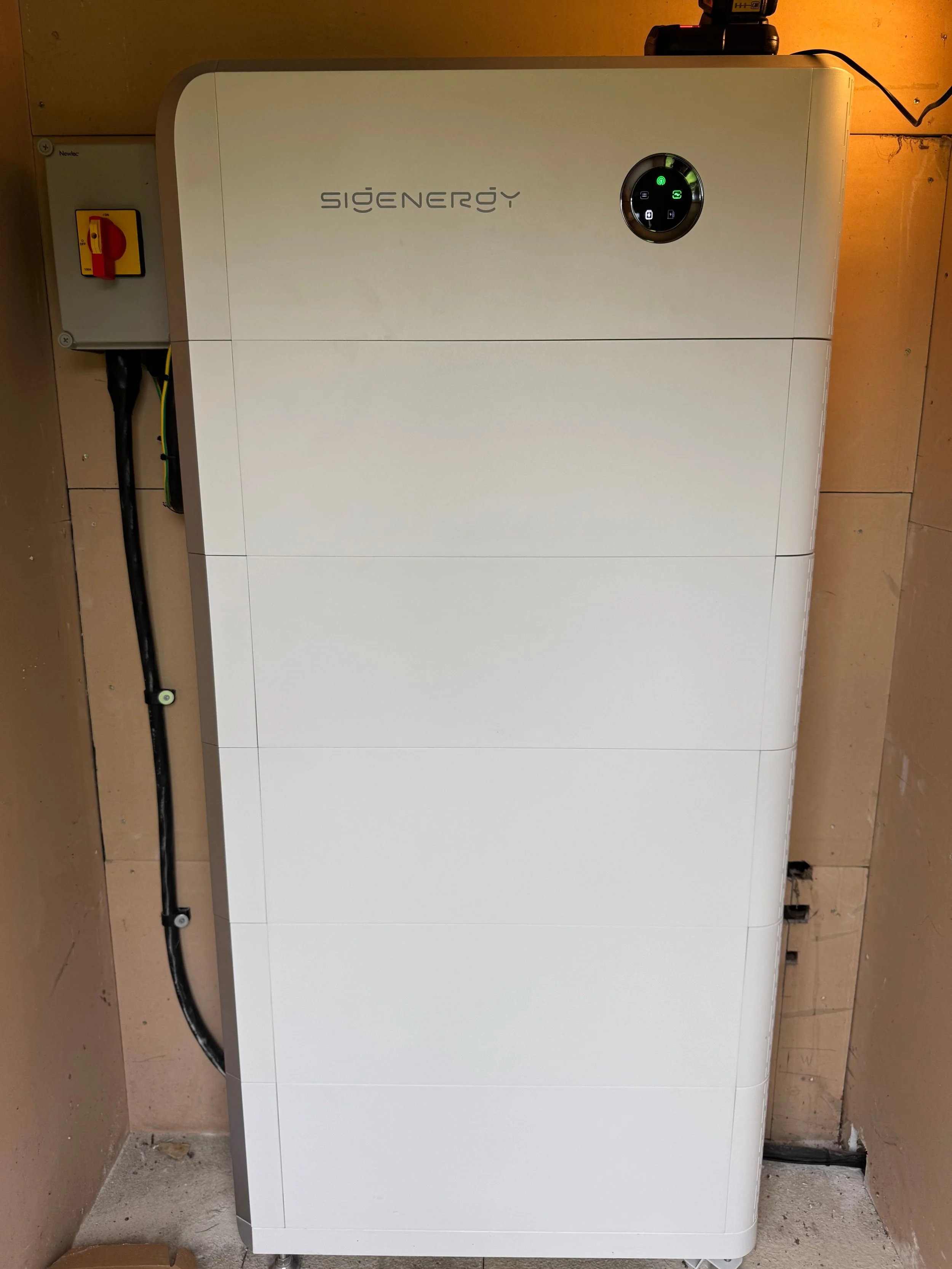
What Is Commercial Battery Storage?
Commercial battery storage systems store electricity for later use, helping businesses reduce reliance on expensive peak-rate grid electricity.
The stored energy can come from:
Solar panels
Cheap overnight electricity tariffs
Renewable energy sources
The grid during lower-demand periods
The energy can then be used during periods of high electricity demand, helping reduce operational costs and improve energy efficiency.
Commercial Battery Storage With and Without Solar
One of the biggest misconceptions is that battery storage only works with solar panels.
In reality, businesses can benefit from battery storage both with and without solar PV systems.
With Solar Panels
Battery storage allows businesses to maximise the value of their commercial solar panel systems by storing excess solar energy generated during the day instead of exporting it back to the grid.
This can help:
Increase solar self-consumption
Reduce grid reliance
Improve ROI from solar installations
Support daytime operational energy demand
Charge EV fleets using renewable energy

Combining solar PV with solar and battery storage solutions can significantly improve long-term energy savings and reduce reliance on expensive grid electricity.
Without Solar Panels
Businesses can also use battery storage independently as part of a wider business energy solutions strategy, charging systems overnight using cheaper electricity tariffs and discharging during expensive daytime peak periods.
This is particularly useful for:
Warehouses
Offices
Hospitality businesses
Retail sites
Industrial units
This approach can help businesses reduce commercial electricity costs and gain greater control over operational energy usage.
Supporting Commercial EV Charging Infrastructure
As more businesses install EV chargers for staff, customers, and fleet vehicles, energy demand is increasing rapidly.
One of the biggest challenges businesses now face is:
grid capacity limitations.
In many cases, upgrading grid connections can be expensive and time-consuming.
Commercial battery storage can help by:
Supporting EV charger demand
Reducing strain on the grid
Storing cheap overnight electricity for daytime charging
Helping avoid peak demand spikes
Improving load balancing across sites
This is becoming especially important for:
Fleet operators
Commercial premises
Hospitality venues
Car parks
Workplace charging locations such as Vision Engineering in Woking where we installed EV Charge Points
Reducing Peak Electricity Costs
Commercial electricity costs are often highest during periods of peak demand.
Battery storage systems can help reduce these costs through:
peak shaving.
This means businesses can:
Charge batteries during lower-cost periods
Use stored energy during expensive peak-rate hours
Reduce reliance on high-cost grid electricity
For businesses with high daytime consumption, this can significantly reduce electricity costs over time.
Industries That Benefit Most:
Manufacturing
Warehousing
Hospitality
Retail
Offices
Cold storage facilities
For example, our recent work on a warehouse and commercial property project demonstrates how businesses are increasingly investing in scalable energy infrastructure to improve efficiency and future-proof operations.
Improving Energy Resilience and Backup Power
Power outages and supply instability can create major operational disruption for businesses.
Commercial battery storage systems can provide:
Backup power support
Increased operational resilience
Reduced downtime risk
Protection for critical systems
For many businesses, energy resilience is now just as important as energy savings.
This is particularly valuable for:
Data-sensitive businesses
Healthcare environments
Hospitality venues
Security systems
Refrigeration and cold storage
Operational infrastructure
For sectors where operational continuity is critical, commercial battery storage can play an important role in wider commercial energy resilience strategies by helping support critical systems during supply interruptions and periods of peak demand.
This is becoming increasingly relevant across sectors such as construction, warehousing, and commercial property, where energy reliability and operational uptime are essential. Our recent commercial construction energy project highlights how businesses are increasingly investing in future-proof energy infrastructure to support long-term operational efficiency.
Scalable and Stackable Commercial Battery Systems
One of the biggest advantages of modern commercial battery storage is scalability.
Many systems are:
Modular
Stackable
Expandable over time
This allows businesses to:
Start with smaller systems
Expand storage capacity as demand increases
Scale alongside EV charging infrastructure
Future-proof energy requirements
This flexibility is especially valuable for growing businesses and sites planning long-term electrification.
One of the biggest advantages of modern commercial battery storage is scalability. Many systems are modular and stackable, allowing businesses and organisations to expand storage capacity over time as energy demand increases.
This flexibility is particularly valuable for sites planning future EV charging expansion, electrification projects, or increasing operational electricity usage.
Our recent commercial battery storage project for Waverley Borough Council demonstrates how stackable battery systems are helping organisations build more flexible and future-proof energy infrastructure.
Is Commercial Battery Storage Worth It?
For many UK businesses, commercial battery storage is becoming less of a luxury and more of a strategic investment.
The biggest benefits often include:
Lower electricity costs
Better energy control
Improved sustainability
Reduced peak demand charges
EV charging support
Increased resilience against supply instability
The return on investment depends on:
Energy usage patterns
Operational hours
EV charging demand
Solar generation
Electricity tariff structure
Businesses with high daytime energy demand or growing EV infrastructure often see the strongest long-term value.
Final Thoughts
Commercial battery storage is rapidly becoming a key part of modern energy infrastructure for UK businesses.
Whether used alongside solar panels, to support EV charging, or simply to reduce operational energy costs, battery storage offers businesses greater flexibility, resilience, and long-term control over their electricity usage.
As electricity demand continues to grow and businesses move towards electrification, scalable battery storage systems are likely to play an increasingly important role in future-proofing commercial sites.