Why the New Year Is the Best Time to Review Energy Costs and Start a Smarter Green Energy Journey

The New Year is a time for fresh starts, better planning, and smarter financial decisions. For homeowners and businesses alike, it’s also the perfect moment to review energy costs and take control of how electricity is generated, stored, and used.

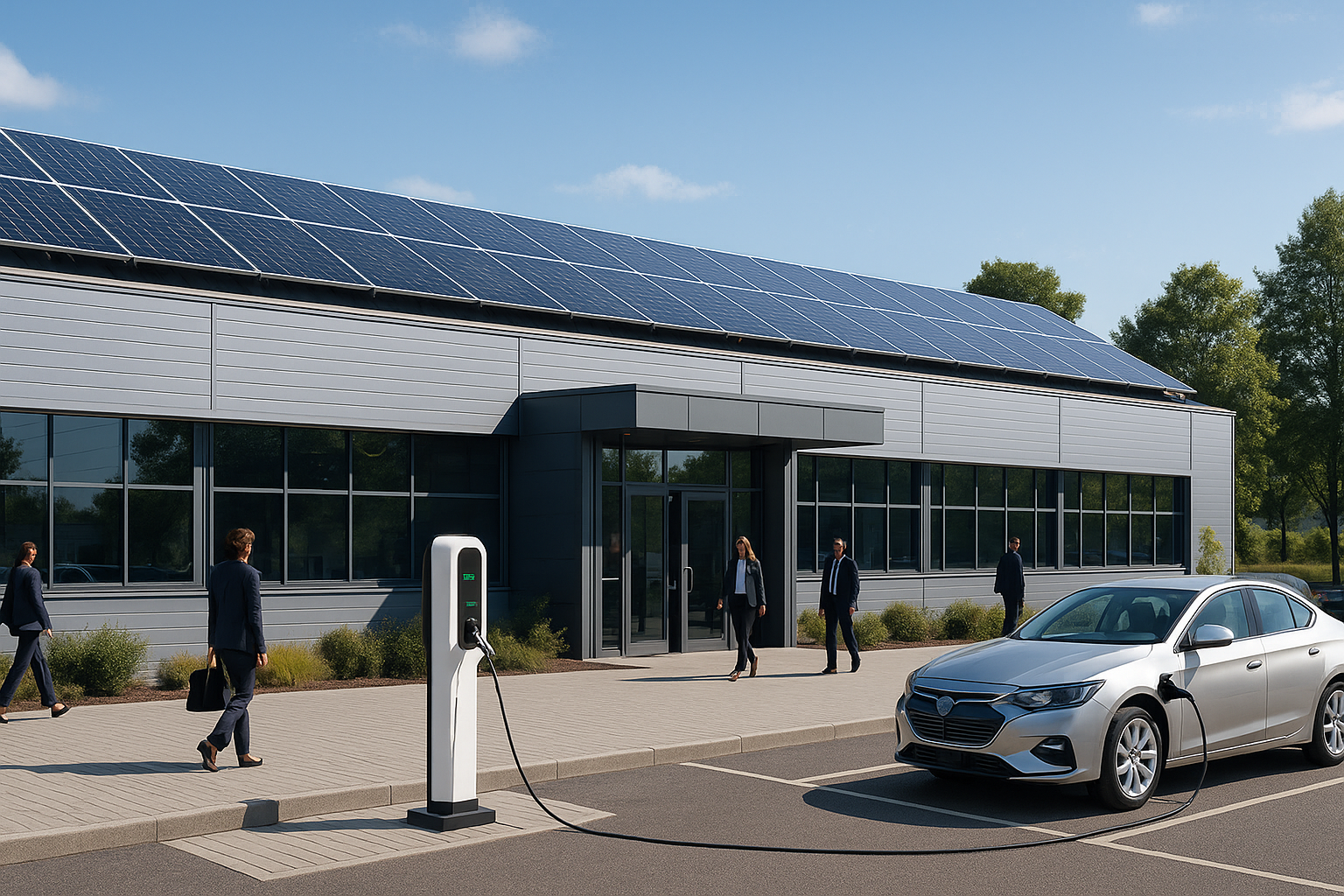
With energy prices continuing to fluctuate and sustainability becoming a priority for households and organisations across the UK, investing in solar panels, battery storage, and EV charging has never made more sense. At UKGEI, we design fully app-controlled renewable energy systems for domestic and commercial customers – and as a brand-agnostic installer, we always put the solution first.

Why Review Your Energy Costs in the New Year?

January is a natural checkpoint for both households and businesses. It’s when:

  • Annual budgets are reviewed

  • Energy contracts are reassessed

  • Winter energy usage is at its highest

For homeowners, this often highlights how much energy is being bought from the grid during expensive peak periods. For businesses, rising electricity costs can significantly impact operating margins.

A New Year energy review helps identify:

  • Where energy is being wasted

  • When peak tariffs are affecting bills

  • How much could be saved by generating and storing power on-site

Solar Panels: Clean Energy for Homes and Businesses

Installing solar PV systems allows you to generate your own renewable electricity directly from your roof, reducing reliance on the grid.

Domestic solar benefits:

  • Lower electricity bills

  • Reduced exposure to energy price rises

  • Increased property value

  • Cleaner, greener living

Commercial solar benefits:

  • Significant long-term cost savings

  • Improved energy security

  • Reduced carbon footprint and ESG impact

  • Strong ROI for warehouses, offices, retail, and industrial sites

Solar is the foundation of any green energy journey – but its true potential is unlocked when combined with battery storage.

Battery Storage: Use Your Energy When You Need It Most

Battery storage systems allow you to store excess solar energy rather than exporting it back to the grid.

This means you can:

  • Use stored energy in the evenings or during peak tariff periods

  • Reduce grid dependence

  • Maximise solar self-consumption

  • Protect against future energy price increases

For commercial users, battery storage can also:

  • Reduce peak demand charges

  • Support load shifting

  • Improve resilience during grid instability

Battery storage turns renewable energy into a reliable, controllable asset.

EV Chargers for Homes and Businesses

With electric vehicles becoming the norm, installing EV chargers is a smart move for both domestic and commercial properties.

Home EV charging:

  • Convenient overnight charging

  • Lower running costs

  • Ability to charge using solar and stored energy

Commercial EV charging:

  • Support fleet electrification

  • Provide charging for staff and customers

  • Future-proof your site as EV adoption grows

When integrated with solar panels and battery storage, EV charging becomes even more cost-effective and sustainable.

One App to Control Your Solar, Battery, and EV Charger

Modern renewable energy systems aren’t just about hardware – they’re about smart control.

UKGEI systems are managed through a single, intuitive app, giving you full visibility and control over your energy.

With app-based energy management, you can:

  • Monitor energy generation and consumption in real time

  • Control battery charging and discharging

  • Schedule EV charging during off-peak or solar-rich periods

  • Optimise energy usage automatically

For businesses, this data is invaluable for tracking performance and improving efficiency across sites.

Brand-Agnostic Energy Solutions Designed Around You

One of the key differences with UKGEI is that we are completely brand agnostic.

This means:

  • We don’t push a single manufacturer

  • We design systems based on your building, usage, and goals

  • We select proven technologies that work best together

  • We future-proof installations so they can be expanded later

Whether you’re a homeowner starting your green journey or a business investing in long-term energy resilience, our approach ensures you get the right solution – not a one-size-fits-all system.

The New Year Is the Time to Take Control of Your Energy

Reviewing energy costs at the start of the year puts you in control for the next 12 months and beyond. By investing in solar panels, battery storage, and EV chargers, you can reduce bills, improve sustainability, and protect yourself from future price uncertainty.

For domestic and commercial customers across the UK, UKGEI delivers intelligent, app-controlled renewable energy systems built around your needs.

Contact UKGEI today to start your New Year energy review and take the first step towards a smarter, greener future.

Frequently Asked Questions FAQs

  • Yes. The New Year is an ideal time to review energy costs as it aligns with budgeting, contract renewals, and peak winter usage. It allows homeowners and businesses to identify savings opportunities early and plan long-term energy improvements.

  • Yes, solar panels work all year round, including winter. While output is lower than in summer, panels still generate electricity during daylight hours. Cold temperatures can actually improve panel efficiency, especially on bright winter days.

  • Battery storage allows you to store excess solar energy and use it when electricity prices are highest. This helps reduce reliance on the grid, lower energy bills, and maximise the value of your solar system for both domestic and commercial properties.

  • Yes. When combined with solar panels and battery storage, an EV charger can use renewable energy generated on-site. This significantly reduces charging costs and lowers the environmental impact of driving an electric vehicle.

  • An app-controlled system allows you to monitor and manage solar generation, battery storage, and EV charging in one place. You can track energy usage in real time, schedule charging, and optimise when stored energy is used.

  • Being brand agnostic means UKGEI selects equipment based on performance, compatibility, and suitability — not manufacturer loyalty. This ensures each system is tailored to the property, energy usage, and future requirements.

  • Yes. Commercial solar and battery systems are ideal for offices, warehouses, retail units, and industrial sites. They help reduce operating costs, support sustainability goals, and improve long-term energy resilience.

  • Yes. UKGEI designs systems with future expansion in mind, allowing additional solar panels, battery capacity, or EV chargers to be added as energy needs grow.
Even Santa Knows the Future is Green

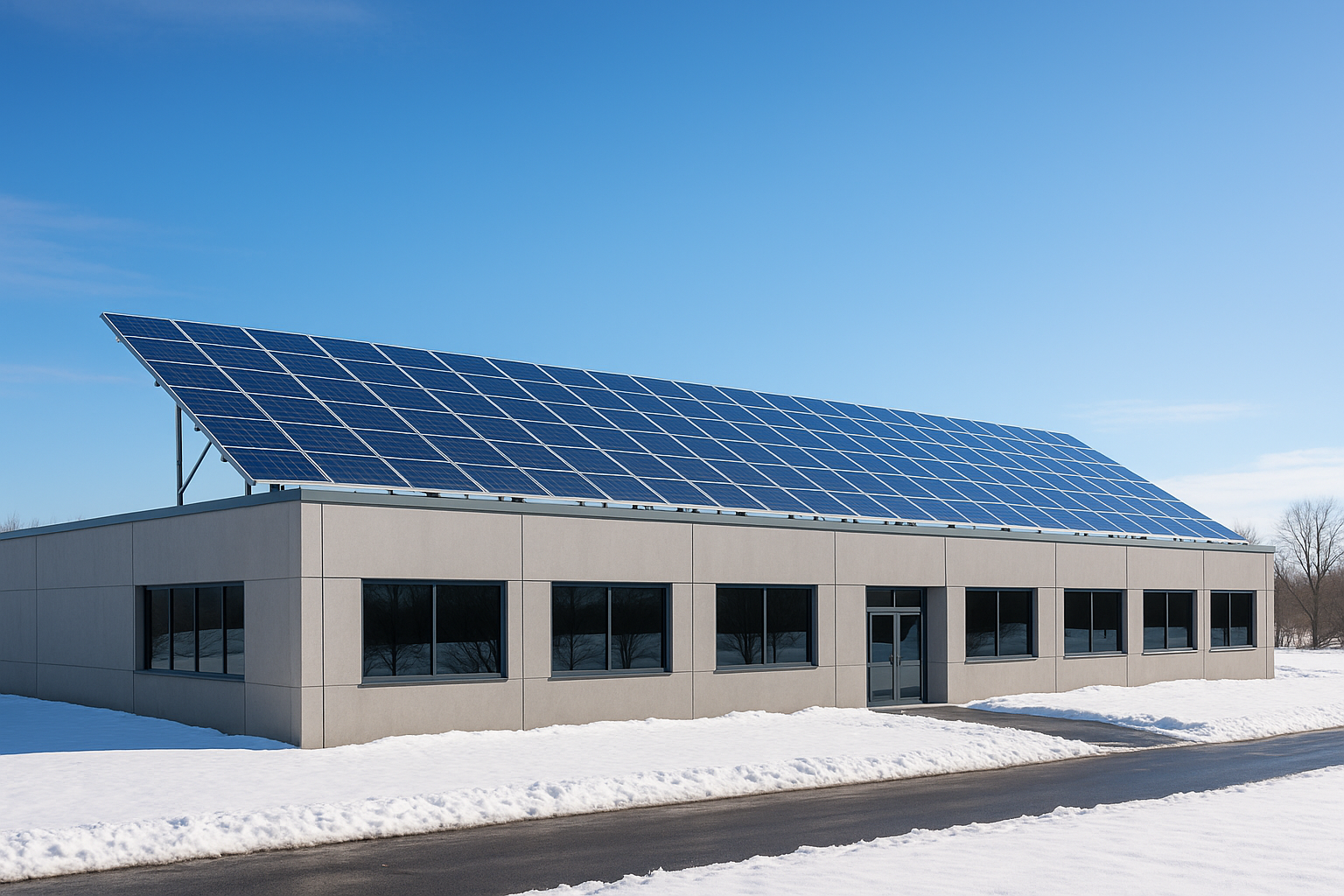
This Christmas, we’re spreading festive cheer with a little help from clean energy. From EV-powered sleighs and fully charged Rudolphs to solar panels working even on snowy days, our latest video shows how renewable energy keeps everything running smoothly — even at the North Pole.

At UK Green Energy Installations, we believe smart energy solutions aren’t just for Christmas — they’re for all year round. Whether it’s solar panels, battery storage, or EV charging, we’re helping homes across the UK stay powered, efficient, and future-ready.

Do Solar Panels Work in Winter? Why Modern Systems Keep Producing Power Year-Round

When temperatures drop and the skies turn grey, many homeowners wonder whether their solar panels still generate electricity. It’s a common misconception that solar only works in hot, sunny weather — but the truth is far more reassuring.

Modern solar-panel systems continue to produce electricity throughout winter, even when it’s cold, cloudy, or overcast. That’s because solar panels rely on daylight, not heat, to create energy.

In fact, cool temperatures can actually make panels perform more efficiently.

Why Solar Panels Still Work in Winter

1. Solar panels need light, not heat

Solar photovoltaic (PV) panels absorb photons from daylight. While bright sunshine maximises output, any available daylight — even diffused light on cloudy days — generates electricity.
This means your system won’t shut down just because the weather isn’t picture-perfect.

2. Cold weather boosts performance

Electronics generally operate better in cooler temperatures, and solar PV is no exception. Extreme heat can reduce efficiency, so winter’s crisp conditions can actually help panels work more effectively.

3. Cloudy and overcast? They still produce power

Clouds scatter sunlight, but they don’t eliminate it. Modern solar panels are designed to capture diffuse light, maintaining steady production. While output may be lower than in summer, you’ll still see meaningful energy generation.

4. Shorter days don’t stop the savings

Winter brings fewer daylight hours, meaning naturally less total energy. However, pairing your solar panels with a battery storage system ensures the energy you generate during the day can be used whenever you need it — evening, overnight, or during peak-rate periods.

5. Snow isn’t usually an issue

In the UK and many regions, heavy snow is rare. Even when it does fall, panels are angled so snow slides off, and the dark glass surface warms slightly when sunlight hits it, helping melt snow quickly.

Planning Ahead Matters — Especially for Commercial Three-Phase Systems

If you’re installing a commercial solar system that uses a three-phase connection, there’s an additional step to consider: your system must go through DNO (Distribution Network Operator) approval.

This approval ensures the local electricity network can safely accommodate the amount of power your system will generate. However:

  • Approval times vary by region, depending on how busy your local DNO is.

  • In some areas, this process can take weeks or even several months.

  • No commercial system can be energised until approval is granted.

That’s why planning now is essential.

Starting the process in winter means you’re far more likely to have approval in place — and your installation ready to go — by spring, when solar generation rapidly increases and the longer days begin to boost your savings.

Real Benefits of Winter Solar

Despite seasonal variations, homeowners with solar PV enjoy:

  • Lower electricity bills all year

  • Reduced reliance on the grid

  • Protection from rising energy prices

  • A smaller carbon footprint

  • Increased property value

Winter may change the amount of energy your panels produce, but it doesn’t stop them working — and it certainly doesn’t stop you saving.

Ready to Explore Solar for Your Property or Business?

We’d love to hear your plans for solar and see how we can help with your project. Now is a great time to get the ball rolling.

Solar, Battery & EV Charging: What’s the Real ROI? A Clear Look at Domestic & Commercial Savings

If you live or operate a business in Hampshire, Surrey, or Berkshire, switching to renewable energy is one of the smartest financial decisions you can make in 2025. But the big question remains:

  • What’s the return on investment (ROI)?

  • How quickly will a system pay for itself?

  • What is the Total Cost of Ownership (TCO)?

At UK Green Energy Installations (UKGEI), we’ve installed thousands of renewable systems — from small domestic solar arrays to large 100+ panel commercial setups — and the numbers are consistently impressive.

Solar, Battery & EV Charging: What’s the Real ROI?

Below, we break down two real-world examples to show just how strong the financial case is.

🔹 Example 1: Typical Domestic Solar + Battery System

System:

  • 10 solar panels (4 kWp)

  • 5–10 kWh home battery

  • Fully installed average cost: £8,000–£11,000

Estimated Annual Benefits – Domestic System

Benefit Amount
Bill savings £700–£1,000/yr
Battery time-shifting via cheap rates £150–£300/yr
SEG payments £80–£160/yr
Total yearly benefit £930–£1,460

Financial Summary

  • Payback period: 6–9 years

  • System lifespan: 25+ years

  • Net profit over life: £15,000–£25,000+

  • Carbon savings: ~900 kg CO₂ per year

✔ Domestic systems now often exceed 10–12% annual ROI — outperforming most savings accounts.


Example 2: Large Commercial Install (100–120 Panels)

System:

  • 40–50 kWp solar array (approx. 100–120 panels)

  • Optional 3-phase battery storage

  • Installed cost range: £45,000–£65,000

Estimated Annual Benefits – Commercial System (100+ Panels)

Benefit Amount
Bill savings £6,000–£10,000/yr
Export payments £1,000–£2,000/yr
Enhanced reputation + ESG benefits High intangible value

Financial Summary

  • Payback period: 4–6 years

  • Annual ROI: 15–22%

  • Lifetime savings: £150,000–£250,000+

  • Carbon savings: 8–12 tonnes of CO₂ per year

✔ For commercial sites, solar is one of the strongest financial investments available today.

Why ROI is so strong in 2025

  • Energy prices remain high and volatile

  • Solar panel outputs have improved 20–30% in the last decade

  • Batteries make solar power far more usable

  • More businesses commit to ESG, net-zero and sustainability

  • Government incentives & export tariffs help offset costs

Ready to See Your ROI?

UKGEI provides:
✔ Full system design & costings
✔ Local surveys across Hampshire, Surrey & Berkshire
✔ Solar, battery and EV installations for homes & businesses
✔ Maintenance & ongoing support

Start your personalised ROI estimate below

Frequently Asked Questions FAQs on Solar ROI

1) How much money can a typical UK home save with solar panels and a battery in 2025?

A modern 4kW solar system paired with a 5–10kWh battery can save a UK household between £900 and £1,400 per year through bill reduction, time-of-use charging and SEG export payments. With system costs between £8,000–£11,000, most homes see a 6–9 year payback, with 25+ years of usable system life.

2) Is solar still worth it if my home is in Hampshire, Surrey or Berkshire?

Yes — these counties receive strong annual irradiation, making solar very effective. Properties in Hampshire, Surrey and Berkshire typically cover 50–80% of annual energy consumption, especially when combining solar with battery storage. ROI is higher here due to above-average local electricity costs.

3) What is the ROI on a commercial solar installation with 100+ panels?

A 100–120 panel commercial system (40–50kWp) usually delivers £6,000–£12,000 yearly savings, often achieving 15–22% annual ROI. Businesses typically see payback in 4–6 years, with lifetime financial gains exceeding £150,000–£250,000 depending on energy usage and export value.

4) How long do solar panels and batteries last before they need replacing?

Modern solar panels last 25–30 years, often producing over 85% of their original output even after two decades. Lithium batteries typically last 10–15 years, depending on depth of discharge and daily cycles. In most cases, panels outlast the inverter (usually replaced once every 10–12 years).

5) Can adding a battery make my solar system pay for itself faster?

Yes. Batteries significantly improve ROI by letting you use more of your solar energy at night and during peak pricing, often increasing self-consumption from 30–40% up to 70–90%. Homes using time-of-use tariffs can also charge cheaply overnight, improving overall payback and savings.

6) Do commercial buildings need planning permission for solar panels?

Most commercial solar systems fall under permitted development and don’t require planning permission unless the panels protrude more than 200mm, are on a listed building, or positioned near a boundary. UKGEI handles all compliance checks, site surveys and grid applications for you.


Please note: All ROI, annual savings and payback figures shown are illustrative estimates based on typical system sizes and average UK usage patterns. Real-world results vary depending on site conditions, energy consumption, local tariffs, export rates, equipment choice, shading, roof layout and system configuration. UKGEI provides a tailored survey and design to calculate accurate projections for your property or business.


Which Energy Solution Is Right for You?

Discover UKGEI’s Interactive Brand & Solution Finder

Introduction

Choosing the right renewable energy system can be a challenge. With so many technologies, brands and configurations available, how can you tell what best fits your needs?

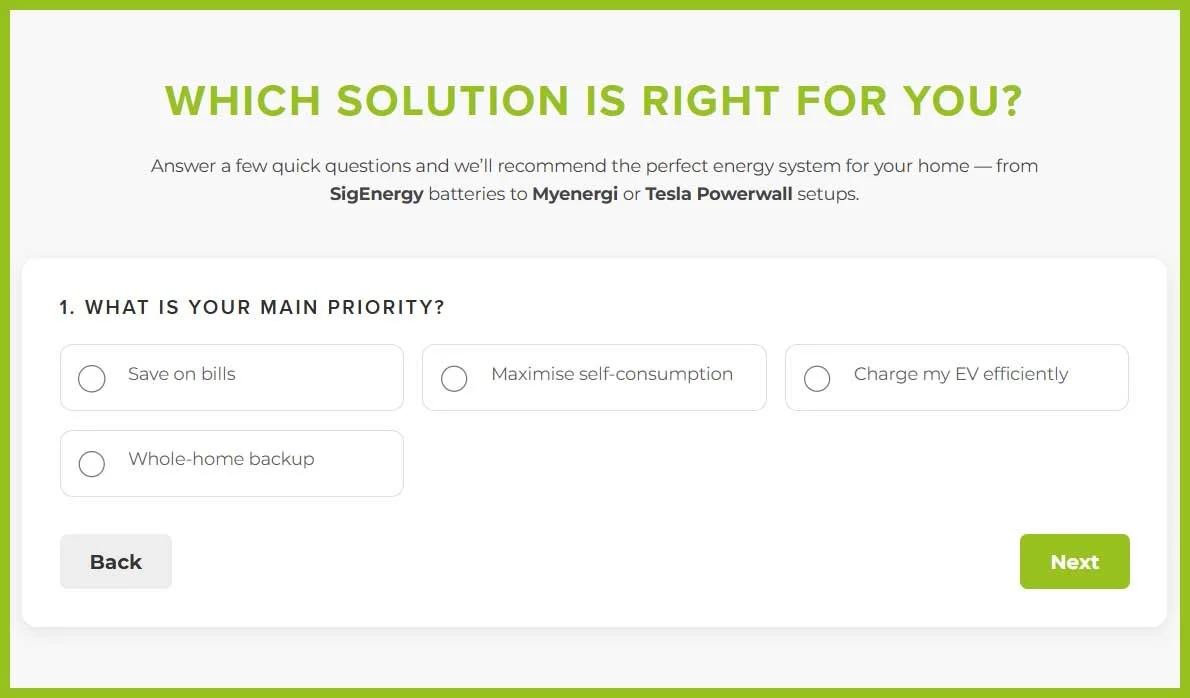
UK Green Energy Installations (UKGEI) has launched an innovative Interactive Brand & Solution Finder, designed to make that decision simple. This intuitive online tool guides homeowners and business owners through a few quick questions to match them with the most suitable solar, battery storage, and EV charging solutions — all in just a few minutes.

Try the Interactive Brand & Solution Finder

How the Tool Works

Step 1: Choose Your Main Priority

Start by identifying your goal — whether that’s saving on energy bills, maximising self-consumption, charging an electric vehicle efficiently, or achieving whole-home backup power.

Step 2: Describe Your Roof and Property

Next, you’ll specify your property type: pitched roof, flat roof, mixed/asymmetric roof, or one with partial shading. This helps the system understand your energy potential and design constraints.

Step 3: Share Your Current Setup

Do you already have solar panels or an EV charger installed? The tool factors in your existing setup so that recommendations complement, not duplicate, your equipment.

Step 4: Receive a Personalised Recommendation

Based on your responses, the tool provides a tailored system suggestion — highlighting compatible brands, technologies, and configuration options. You can then request a quote or book a consultation with the UKGEI team.

Why It Matters

Tailored to Your Needs

The solution finder delivers results based on your property and energy priorities — removing guesswork and avoiding unsuitable recommendations.

Simplifies Complex Choices

From panel wattage to inverter types, renewable systems can be technical. This tool breaks it down into an easy, guided journey.

Saves Time and Increases Confidence

By narrowing down the right options early, you can move forward confidently without endless research.

Avoids Costly Mismatches

By assessing roof orientation, shading and your current setup, the tool helps prevent choosing incompatible or inefficient products.

Benefits for Homeowners and Businesses

  • Homeowners: Identify energy-efficient systems that fit your home’s design and budget while reducing energy bills.

  • Commercial clients: Explore scalable solar and storage solutions that lower operational costs and meet sustainability goals.

  • Installers and property managers: Save time on pre-qualification by using the tool for early-stage assessments.

Why Choose UKGEI

UKGEI is a trusted renewable energy specialist working across Surrey, Hampshire and Berkshire, with extensive experience in:

The Interactive Brand & Solution Finder reflects UKGEI’s commitment to innovation and customer service — helping clients find smarter, more sustainable energy solutions quickly and confidently.

Get Started Today

Whether you’re upgrading your current system or exploring renewable energy for the first time, UKGEI’s Interactive Brand & Solution Finder is the perfect starting point.

Answer a few quick questions, get your tailored recommendation, and take the next step toward a greener, more efficient future.


Can Solar Panels Really Help Pay for a Heat Pump?

Many homeowners are now exploring renewable heating options and wondering if solar power can offset the cost of installing a heat pump.

Can Solar Panels Really Help Pay for a Heat Pump?

The short answer is yes — but only partially. Solar doesn’t pay for a heat pump outright, but it can significantly reduce the long-term running costs, making the overall investment more manageable.

Let’s break down how it works.

Get Help from the Government Grant

Thanks to the UK Government’s Boiler Upgrade Scheme, homeowners in England and Wales can claim up to £7,500 towards installing an air-source or ground-source heat pump.

Apply for the Boiler Upgrade Scheme here

This generous grant reduces the upfront cost substantially — but most households will still have to contribute several thousand pounds towards the total installation.

How Solar Panels Make a Difference

While the BUS grant helps you install your heat pump, solar panels help you run it more affordably.

Here’s how:

  • A heat pump runs on electricity. Solar panels let you generate some of that power for free.

  • The more solar energy you use directly, the less you buy from the grid — cutting your monthly energy bills.

  • You can store extra power in a solar battery, helping you use solar energy even when the sun isn’t shining.

  • Solar and heat pumps together can add value to your home and reduce your carbon footprint.

Remember: Solar Won’t Cover Everything

It’s important to be clear — solar helps, but it won’t cover the entire cost of running a heat pump.

That’s because:

  • Seasonal mismatch: Solar power peaks in summer, while heat pumps use the most electricity in winter.

  • Roof space: Most homes can’t fit enough panels to power 100% of their heating demand.

  • Separate incentives: The BUS grant applies to the heat pump, not to solar panels.

Still, using solar to supply even a portion of your heat pump’s electricity can make a noticeable impact on your bills.

The Combined Savings Picture

Here’s a simple breakdown of how combining solar and a heat pump adds up:

Cost Element Support / Benefit
Heat Pump Installation Up to £7,500 off via the Boiler Upgrade Scheme
Solar Panel Installation Separate investment — can reduce electricity bills
Running Costs Reduced thanks to solar generation
Long-Term Savings Lower energy bills, lower carbon footprint, potential property value boost

Example utilising solar and battery storage, leveraging on charging at cheaper rate.

The table below shows a combined savings of £792 if you utilise energy from solar and battery storage charging at cheaper rate compared with peak rate.

Scenario Assumed Coverage Annual HP kWh from Grid Effective Unit Price Annual Running Cost Saving vs Baseline
Baseline (no solar, no battery) 0% 3,000 30.0p £900
A) Battery on cheap rate 100% via battery ~0 (battery supplies) 11.1p £333 £567
B) Solar contribution 25% solar (750 kWh) 2,250 30.0p £675 £225

Example only: Assumes annual heat demand 9,000 kWh (heat), heat pump SCOP 3.0, standard tariff £0.30/kWh, off-peak £0.10/kWh, battery round-trip efficiency 90% (effective ~11.1p/kWh), and 4 kWp solar PV covering ~25% of the heat pump’s annual electricity (seasonality applies). Actual performance and savings vary with property fabric, system sizing, tariffs, usage profile, and weather. Standing charges and export payments are excluded.

Together, solar and heat pumps create a sustainable, lower-cost heating system for your home — especially when paired with proper insulation and smart controls.

How UK Green Energy Installations Can Help

At UK Green Energy Installations, we specialise in helping homeowners make the most of renewable technology. Our team can:

  • Assess your home’s suitability for solar panels and heat pumps

  • Calculate your likely energy savings

  • Design a system that fits your budget and long-term goals

In Summary

Solar panels can’t completely pay for your heat pump — but they can help power it, reduce your running costs, and increase your savings when combined with the government’s £7,500 heat pump grant.

It’s a smart, sustainable step towards lower-carbon living — and one that’s already paying off for thousands of UK homeowners.

Ready to See How Much Solar Could Power Your Heat Pump?

Find out how much solar could contribute to your heat pump’s running costs.
Our expert team can assess your home’s energy use, roof potential, and system design to show you exactly how much of your heat pump’s electricity demand could be covered by solar energy.

FAQs: Solar and Heat Pumps

Can solar panels power a heat pump completely?

Not usually — most homes won’t generate enough solar electricity in winter to cover all heating demand, but solar can significantly reduce grid electricity use in spring and summer. A well-sized solar array can make a noticeable difference to your overall running costs.

Does the government grant apply to solar panels?

No, the Boiler Upgrade Scheme grant only covers the cost of installing a heat pump. Solar panels are a separate investment, but they work hand-in-hand with a heat pump to reduce your ongoing electricity costs.

Will I need a battery to make the most of solar and a heat pump?

A battery isn’t essential, but it helps maximise the use of your solar power. By storing excess energy generated during the day, you can run your heat pump overnight or when the sun isn’t shining — improving your self-consumption and reducing reliance on the grid.

How much could solar reduce my heating bills?

On average, solar panels might cover 20–30% of a heat pump’s annual electricity needs, depending on your roof, home size, and usage pattern. In our example above, that could save around £200–£300 per year compared with running entirely on grid electricity.

Can I still get the heat pump grant if I already have solar panels?

Yes. Having solar panels does not affect your eligibility for the Boiler Upgrade Scheme, as long as your installation meets the grant requirements and is carried out by an MCS-certified installer.